We are thrilled and honoured to share some incredible news! Somali Village has been named the winner of the Cultural Knowledge Exchange Project of the Year at the NCACE Future Icons of Culture Knowledge Exchange Awards. Along with this prestigious title, our project has been awarded a £1,000 prize, which will directly support our ongoing mission.
This national award is hosted by the National Centre for Academic and Cultural Exchange (NCACE), an initiative led by The Culture Capital Exchange (TCCE) and funded by Research England. The awards celebrate outstanding collaborations between higher education and the arts and culture sectors. For us, this win is a beautiful validation of what can be achieved when academic research and community knowledge come together to bring hidden histories to light.
Reclaiming Our History: The Somali Village in Colonial Bradford
Our award-winning project, A Somali Village in Colonial Bradford, explores the complex, deeply moving experiences of the Somali community who were placed at the centre of Bradford’s 1904 Great Exhibition.
We have worked hand-in-hand with Somali historians, elders, creatives, and cultural experts. By blending academic research with our community’s lived knowledge, we are developing a more balanced, authentic, and respectful account of this history. This project is about more than just looking back; it is about bringing greater visibility to the Somali experience and empowering our diaspora to shape and own its historical narrative.
The Power of Partnership
This achievement does not belong to us alone. It is the result of a powerhouse network of regional partners who believed in this vision. Nominated by the Cultural Institute (University of Leeds), this journey has been a deeply rewarding joint effort between Somali Village (as lead organisation) and our incredible partners:
Bradford Culture Company (Bradford 2025 UK City of Culture)
Cartwright Hall Art Gallery (Bradford Museums Service)
University of Leeds
University of Bradford
Accepting the award on behalf of our team, Somali Village trustee Prof. Fozia Bora (Professor of Islamic History, University of Leeds) beautifully captured what this moment means to us:
On behalf of the Somali Village project team, we are incredibly grateful to receive this prestigious award, which recognises both the power and the magic of effective collaboration. Our partners have helped us to co-create a wide range of outputs, including an archaeological dig and associated national TV show segment, a free-to-access schools resource pack and an exhibition that runs until this Autumn.
Two years ago, we had no idea that these creative ways of telling an important and yet morally challenging story would be possible. Our Somali partners (Culture House and Koor Archives in particular) have brought essential knowledge and expertise to allow this history to be shared appropriately, alongside fantastic support from the Universities of Leeds and Bradford, Bradford City of Culture 2025 and the Bradford Museums service. Further support from the Bradford Literature Festival has brought the research to new audiences. A huge thank you to all!
Making History Accessible to All
The most rewarding part of this project has been translating historical research into meaningful public outcomes that everyone can engage with. Together, we have successfully brought this history out of archives and into the community through:
An Archaeological Dig & National TV Feature: Bringing physical history to life for a wider audience.
A Free Schools Resource Pack: Ensuring future generations grow up with a balanced understanding of our local heritage.
A Public Exhibition: Open until this autumn at Cartwright Hall Art Gallery, where you can connect with these stories firsthand.
Literary Outreach: Collaborating with the Bradford Literature Festival to introduce this vital history to entirely new audiences.
A Heartfelt Thank You
We want to extend our deepest gratitude to NCACE, Research England, and TCCE for recognizing the value of our work. Most importantly, a huge thank you goes out to our Somali elders, historians, and community members, especially Culture House and Koor Archives, whose knowledge, trust, and expertise made this project possible.
Thank you for supporting us as we celebrate, honour, and preserve our history.
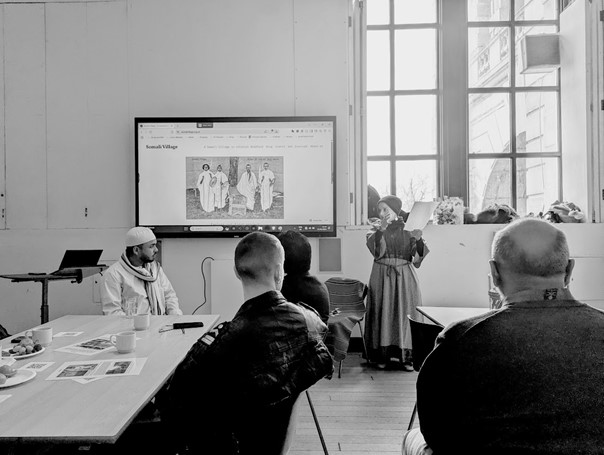
University of Leeds students conduct research into the visual archive of Bradford’s Somali Village of 1904 during the academic year (2025-26). Photograph courtesy of Prof. Fozia Bora.
The Somali Village charity would like to highlight the work of five Leeds University students who were seconded to the Somali Village in Colonial Bradford project during 2025-26, which has seen the release of a schools pack for the whole Bradford District, and the launch of a six-month exhibition at Cartwright Hall.
Wool is often imagined as a traditional product associated with rural landscapes. However, research into Bradford’s industrial history shows that wool was deeply embedded within colonial networks. During the nineteenth century, the city developed from a small market town into the ‘wool capital of the world’, or ‘Worstedopolis’, a term coined by William Cudworth in 1888 (Bradford Museums & Art Galleries, 2022). The expansion of the wool trade enabled the Piece Halls to open in 1773 and supported the growth of textile commerce as larger trading centres developed (Bradford Museums & Art Galleries, 2022). These commercial spaces became important sites of exchange between manufacturers and international buyers, indicating that Bradford’s economy was extending beyond local markets.
In this blog post, I examine the significance of wool within Britain’s industrial development and consider how it can be understood as a colonial commodity within a wider global context. I also explore Bradford’s connections with overseas markets and consider how these relationships emphasise the city’s global significance.
Bradford’s rise as an industrial centre was closely connected to its geographical position and infrastructure. Poor roads initially limited development, making canals essential for moving coal, raw wool and finished cloth. These transport networks connected inland Yorkshire to London and overseas markets, enabling the circulation of raw materials and textiles (Rees, 1948, p. 28).
Transport and technological change were central to Bradford’s industrialisation. The opening of the Moline Mill on Thornton Road in 1798, Bradford’s first steam-powered textile mill, marked a transition towards factory-based manufacturing (Bradford Museums & Art Galleries, 2022). By the 1850s, two-thirds of Britain’s wool industry was concentrated in the Bradford region, providing approximately 70,000 jobs and employing one in three local workers (Bradford Museums & Art Galleries, 2022).
Bradford’s wool industry was also shaped by migration and international commercial networks. The arrival of German merchants in the 1830s contributed to the development of Little Germany, an area of warehouses and trading houses that strengthened Bradford’s role within global markets (Bradford Museums & Art Galleries, 2022). By the mid-nineteenth century, colonial wool, particularly from Australia, formed an increasingly significant proportion of Britain’s raw material supply (Bradford Museums & Art Galleries, 2022; Birt 2025). In 1831, Australia supplied 8% of Britain’s wool, but only twenty years later that had increased to half of a vastly increased total (Belich, 2009, p. 278, cited in Birt 2025). Although wool was often represented as a British rural product, Bradford’s success depended heavily on colonial agriculture, including large-scale Merino sheep farming in Australia. This demonstrates how industrial growth in Britain relied on overseas raw materials and on the relationship between agriculture, technology and imperial trade.
The organisation of the wool industry further illustrates Bradford’s global significance. Weld explains that woollen and worsted manufacture developed into highly specialised industrial processes, with stages such as combing, spinning and weaving sometimes carried out in separate mills (Weld, 1912, pp. 68–70). Large-scale production was therefore made possible by the capacity of British manufacturers to process substantial quantities of imported colonial wool. The industry also linked sheep farming, global trade and consumer markets into a single economic system, contributing to urbanisation, migration and industrial labour in cities such as Bradford. However, by the twentieth century, Bradford’s wool industry began to decline rapidly due to overseas competition and the increasing popularity of alternative clothing and fabrics (Bradford Museums & Art Galleries, 2022).
Understanding wool as a colonial commodity is therefore important for interpreting Bradford’s industrial history and its relationship to wider imperial narratives, including exhibitions. In particular, the concentration of worsted production in regions such as the West Riding of Yorkshire reinforced Bradford’s position as an international centre of textile manufacture.
How, then, does this relate to the Somali Village? This blog post has shown that Bradford’s industrial success was rooted in colonial systems. As the city grew wealthier by processing wool sourced through the empire, exhibitions used displays of colonised people to celebrate imperial success and industrial achievement. This research can therefore help the public understand how local history connects to wider global and colonial histories.
References
Belich, J. 2009. Replenishing the Earth: The Settler Revolution and the Rise of the Angloworld, 1783‒1939. Oxford: Oxford University Press.
Birt, Y. 2025. Bradford’s wool as a settler colonial commodity. Somali Village, 26 April. Available from: Somali Village [Accessed 30 July 2026].
Rees, H. 1948. Leeds and the Yorkshire woollen industry. Economic Geography, 24(1), pp. 28–34. [1]
Weld, L.D.H. 1912. Specialization in the woolen and worsted industry. The Quarterly Journal of Economics, 27(1), pp. 67–94.
Nancy Pilkington produced this work as an output of her module FOAH2002 Student Research Partnerships, part of the BA in Liberal Arts at the University of Leeds, during a placement with the Somali Village in Colonial Bradford project in the academic year 2025–26.
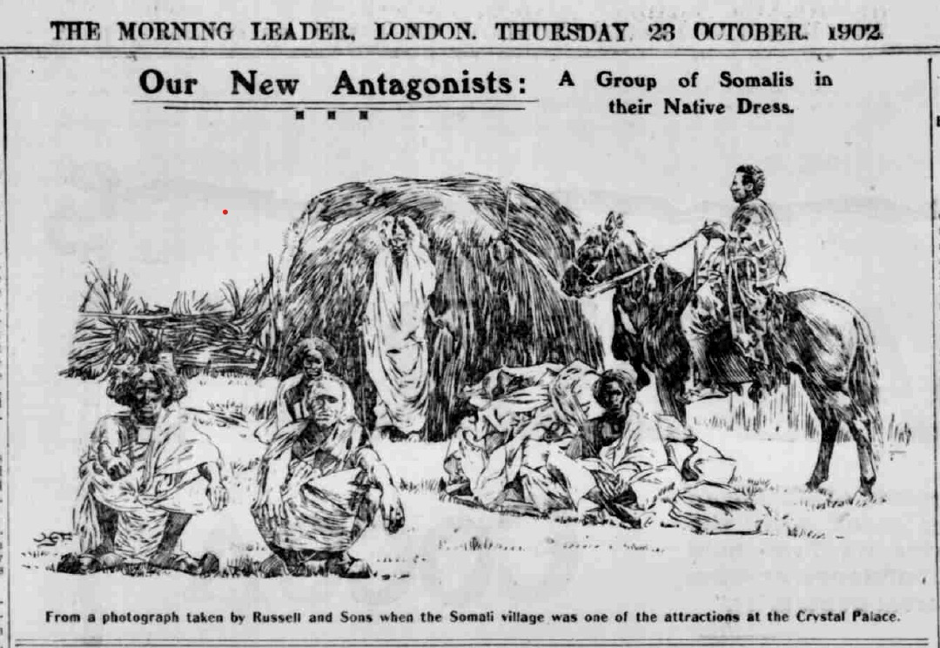
This 1902 illustration, published in The Morning Leader and titled “Our New Antagonists: A Group of Somalis in their Native Dress”, indicates how Somalis were represented to the British public at the same time as Yorkshire military personnel were engaged in operations in Somaliland. The caption states that the photograph was taken at Crystal Palace, where a “Somali Village” was displayed as a public attraction.[1] Such displays formed part of the wider imperial exhibitions of the period, which were designed both to educate and entertain the public. In this context, a complex anti-colonial resistance movement was reduced to a simplified “them versus us” narrative. While soldiers were engaged in colonial warfare, the British press and exhibition culture contributed to shaping public perceptions by presenting Somalis both as curiosities and friendly imperial subjects while also identifying them as “antagonists”. This example illustrates how cultural representation in ethnographic displays operated alongside military campaigns in the broader context of British imperialism.
This blog post examines the involvement of Yorkshire regiments in the first four British campaigns of the Anglo-Somali Wars, which took place between 1900 and 1904, although the conflict continued intermittently until 1920. These early Somaliland campaigns unfolded during a transitional period in which Britain was increasingly shifting its attention from colonial warfare towards the dynamics of European power politics (Blakeley, 2019). The campaigns were “amongst the last ‘Victorian’ colonial military expeditions undertaken by the British Empire” (Blakeley, 2019) and were conducted in response to the anti-colonial resistance of Muhammad Abdullah Hassan (1856–1920). Hassan was a prominent Somali religious and military leader whose opposition to British encroachment generated sustained conflict in Somaliland. The fighting formed part of a broader imperial strategy to contain the Dervish movement under Hassan’s leadership. Continuing intermittently until 1920, these early campaigns marked the beginning of repeated British expeditions and reflected both sustained Somali resistance and the wider difficulties encountered by the British imperial state (Blakeley, 2019).
During the early stages of the Anglo-Somali Wars, many British troops were committed to the Second Boer War (1899–1902), fought between the United Kingdom and the Boer republics of the Transvaal and the Orange Free State. As a result, imperial forces had to be drawn from across the empire to mount the campaign against the Dervishes. Alongside officers sent from Britain, troops from India, Aden and parts of Africa were also deployed (Blakeley, 2019). At the time, the Anglo-Somali Wars were not typically characterised as conventional wars, partly because of the rotating units and attachments deployed from across the British Empire. In Somaliland, British colonial warfare relied heavily on small detachments of regular soldiers rather than full regimental deployments (Slight, 2011). Soldiers from English county regiments, including Yorkshire’s, were therefore often seconded individually or in small detachments rather than in large numbers, situating their service within a broader imperial military system (Slight, 2011).
Further evidence can be found in a 1904 report published in The Yorkshire Post. The article recounts one of the British campaigns in the Anglo-Somali Wars and identifies several Yorkshire military personnel, noting that “a number of local officers are mentioned and recommended in despatches for the recent campaign in Somaliland” (The Yorkshire Post, 5 September 1904, p. 4). The report refers to the Fourth Campaign of 1903–4, which was led by Major-General Sir Charles Egerton, a Yorkshire general. Captain A.E. Hamerton of the Royal Army Medical Corps is recommended for special consideration; he had received his medical training at Leeds Medical School and later served as second surgeon at the Leeds Dispensary. The report also mentions two officers connected with the Leeds Territorial Corps: Captain T.N.S.M Howard for “good work” as a major of the King’s African Rifles, and Captain H.do.B. Codrington, “who is twice referred to”. In addition, it refers to Lieutenant-Colonel C.J. Melliss, V.C., identified as “an old East Yorkshire officer, the son of General Melliss and the son-in-law of the late General Walter C.B. Another military man, Captain Aplin, is presented as presumably an old “Snapper” officer, with service in the Afghan and Burmese campaigns. Captain L. Dess is identified as having formerly served in the Yorkshire Light Infantry, while Captain H.A. Lane is noted as having served in the “Canaries” – a well-known old York regiment. This source is particularly valuable because it demonstrates how imperial warfare was connected to Yorkshire communities through the recognition of her serving officers and their exploits in Somaliland.
A collection of medals awarded to members of the Yorkshire regiments provides further material evidence of Yorkshire troops’ involvement in the Anglo-Somali Wars. For example, a private of the 2nd Battalion, Yorkshire Regiment, received the Africa General Service Medal with the clasp “Somaliland 1902–1904”, directly linking the regiment to the colonial conflict. The Africa General Service Medal (1902‒1956) was issued specifically for British imperial campaigns in Africa, including operations against Hassan, who the British dubbed the “Mad Mullah” (Noonans, 2006).
The purpose of the campaigns was framed by British authorities as the restoration of order. According to A Short History of British Territorial Regiments, the Yorkshire Regiment was represented in the Somaliland Field Force by two officers and 60 men, who formed half of the British mounted infantry serving with it (Rudolf, 1905, p. 193). British operations in Somaliland were presented as necessary because the Dervish movement was said to threaten tribes under British protection. This framing allowed intervention to be justified as a defensive measure rather than as an act of aggression or expansion. In addition, British officials feared that, if left unchecked, the movement could threaten Britain’s alliance with Ethiopia and potentially produce another significant imperial defeat at the hands of a militant Sufi group, as had occurred in the Sudan (Blakeley, 2019). Hussein Bulhan, however, argues that colonial powers “imposed artificial borders” and military control over Somali territories (Bulhan, 2024). He contends that British regiments, including Yorkshire units deployed in Somaliland, functioned as instruments of the imperial system. Bulhan further argues that European powers divided the Horn of Africa without regard for the Somali people who lived there. Although Somalis shared in their homeland a common culture and language, colonial borders divided them across different territories, creating long-term political consequences. From this perspective, the Anglo-Somali Wars can be understood as part of the violent enforcement of colonial partition, rather than as isolated military campaigns. The participation of the Yorkshire Regiment therefore exemplifies Bulhan’s concept of the militarisation of colonial domination, in which European forces were used to suppress Somali resistance to foreign rule.
Endnotes
[1] In 1902, only one Somali ethnographic troupe had appeared in Britain to date, the first one that was staged at Crystal Palace in Sydenham, London, under the leadership of Hirsi Egeh Gorseh and the impresario Carl Hagenbeck. For more on this troupe and the wider phenomenon of Somali ethnographic shows in Europe see Warsame (2022).
References
Blakeley, D. (2019) ‘Britain, India, and the Somaliland Campaigns of 1901–04’, in Olmstead, J.Q. (ed.) Britain in the Islamic World: Imperial and Post-Imperial Connections. Cham: Palgrave Macmillan (Britain and the World), pp. 149–168. Available at: https://doi.org/10.1007/978-3-030-24509-2_7 (Accessed: 28 July 2026).
Noonans (2006) A Collection of Medals to the Yorkshire Regiment (Green Howards) [Auction catalogue, sale of 5 April 2006]. London: Noonans. Available at: https://www.noonans.co.uk/archive/special-collections/250/ (Accessed: 28 July 2026).
Rudolf, R. de M. (1905) Short Histories of the Territorial Regiments of the British Army, Including the Names of the Officers and Soldiers who Have Won the Victoria Cross or the Distinguished Conduct Medal. London: His Majesty’s Stationery Office. Available at: https://archive.org/details/shorthistoriesof00rudouoft (Accessed: 28 July 2026).
Slight, J.P. (2011) ‘British and Somali Views of Muhammad Abdullah Hassan’s “Jihad,” 1899–1920’, Bildhaan: An International Journal of Somali Studies, 10(1), pp. 16–35. Available at: https://digitalcommons.macalester.edu/bildhaan/vol10/iss1/7 (Accessed: 28 July 2026).
Warsame, B, (2022) A Brief History of Staging Somali Ethnographic Performing Troupes in Europe, 1885–1930. In: D. Demski and D. Czarnecka, eds. Staged Otherness: Ethnic Shows in Central and Eastern Europe. Budapest: Central European University Press, pp. 77–100. Available at: https://www.degruyterbrill.com/document/doi/10.1515/9789633864401-004/html (Accessed: 30 July 2026).
Yorkshire Post and Leeds Intelligencer (1904) ‘Somali Expedition: Recognition for Yorkshire Officers’, 5 September, p. 4.
Amber Dennison produced this blog post as an output of her module FOAH2002 Student Research Partnerships, part of the BA in Liberal Arts at the University of Leeds, during a placement with the Somali Village in Colonial Bradford project in the academic year 2025–26.
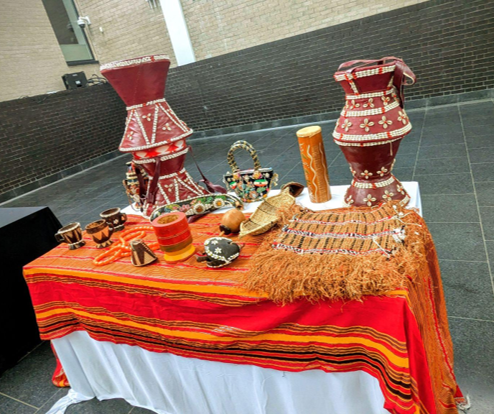
Photograph of textiles similar to those made by the Somalis in 1904. Taken in October 2025. By: Somali community of Cardiff.
In its first month of opening, the Yorkshire Factory Times carried a review of Bradford’s Great Exhibition of 1904, which focused upon how competently it sold the city as a global leader in industrial innovation, especially in its largest industry of textile production. As an aside, the review provided a throwaway comment on the presence of a handloom in the Somali Village, the most popular entertainment at the Exhibition:In its first month of opening, the Yorkshire Factory Times carried a review of Bradford’s Great Exhibition of 1904, which focused upon how competently it sold the city as a global leader in industrial innovation, especially in its largest industry of textile production. As an aside, the review provided a throwaway comment on the presence of a handloom in the Somali Village, the most popular entertainment at the Exhibition:
The hand loom in the exhibition weaving cloth goods is a novelty, but is that and nothing more, as is also the spinning wheel, with its combed wool spun into weft. The loom in the Somali portion, if a correct method of weaving as carried on in the black districts, won’t cause foreign competition to teach us to put tariffs on.[1]
Contemporaneous Somali hand-weaving was dismissed as part of the old world that Britain had left through industrial innovation, as a quaint novelty that had no relevance to the hard-nosed world of technology and business. In the rest of this blog, I shall set out to challenge this casual and racializing dismissal.
The practice of Somali hand-weaving brings together music, art, practicality and heritage. Precisely because of this hybridity, I argue, it also posed a threat to the British Empire’s attempt to present African cultural production as static, primitive or inferior. By examining the historical treatment of hand-weaving, while also challenging its current perception as an archaic folk art, we can better understand the relationship between Somalia’s colonisation and the cultural practices that are now at risk of being lost to members of the diaspora. In this context, the juxtaposition between hand-weaving in the 1904 Somali Village and the textile machines displayed in the Industrial Hall becomes symbolic of the unequal relationship between Britain and its imperial subjects.
To begin with, the historical significance of weaving in Somalia has been largely ignored in academic research. This neglect helps obscure the impact that the decline of Somali textile exportation had on the country’s economic and cultural identity. As Clarence-Smith states,
the Benadir coast of Somalia had an ancient reputation as an exporter of cotton textiles. Back in the fourteenth century, Ibn Battuta noted that the “unequalled” cloth of Mogadishu was exported “to Egypt and elsewhere.”[2]
This history shows that Somalia’s role in textile production has been systematically disregarded. Such disregard reflects a wider colonial framework in which African products are valued only when they can be extracted, appropriated or reinterpreted through European systems of knowledge and production. Britain benefited from processes perfected over centuries in Somalia while also contributing to the removal of resources and labour that could have supported Somalia’s own technological development. As factory methods came to dominate global textile production, hand-weaving was increasingly pushed aside and associated with a supposedly pre-modern past. In this way, the 1904 exhibition, which featured the Somali Village in juxtaposition to the Industrial Hall, helped justify British imperialism to white audiences through the display of technological advancement.
This contrast was especially visible in the relationship between the Somali Village and the wider 1904 Bradford Exhibition. Hattersley’s, based in Keighley, invented, patented and manufactured the “self-shuttling” loom in 1901, before its introduction into the Industrial Hall at the 1904 Bradford Exhibition.[3] By placing Somali hand-weaving in the Village alongside such industrial advances, the exhibition encouraged visitors to read Somali labour as slow, manual and inferior. Yet this framing ignores the historical and cultural importance of hand-weaving, as well as the performers’ own skill and labour. They built the village by hand and sustained a community in a completely new environment in Bradford for six months. The contrast between the Somali Village and the Bradford Exhibition was therefore not neutral: it shaped, and was shaped by, Britain’s colonial view of Africa and its people.
A further dimension of this erasure is the role of women in hand-weaving. The hand-weaving exhibited in the Somali Village would likely have been undervalued and treated as folk art to be viewed with patronising wonder. This dismissal was intensified by the fact that, in Somalia, most hand-weaving is traditionally done by women. When positioned against the industrial, scientific and technological – and therefore, by extension, male – achievements displayed in the 1904 Exhibition, Somali hand-weaving could be reduced to a women’s pastime rather than recognised as skilled cultural production:
In a jointly sponsored UNESCO and UNICEF report on a seminar held in April 1978 in Mogadishu on Basic Education for Nomads, “[..] Arts and Crafts among the Somali nomads centre on wood carving; camel bells, wooden spoons, forks, dishes, walking sticks etc.” It is interesting that the arts and crafts of which the author Abdi Arte speaks are woodcarving, the one and only craft executed by men.[4]
The failure to recognise objects made by women therefore reproduces two forms of hierarchy at once. It privileges Western technology over Somali craft, and it privileges male-made objects within Somali cultural history over the work of women. As a result, the strength, knowledge and skill of women weavers are pushed out of view, allowing hand-weaving to be framed as a historical craft left behind by Western progress rather than as a living and complex cultural practice in its own right.
At the same time, hand-weaving in the Somali Village may also have helped connect the performers to the homes they had left behind. However, this cultural connection was complicated by the commercial setting of the exhibition, where the troupe sold their handmade items to visitors. This created a tension between hand-weaving as a practical and cultural practice and hand-weaving as a performance for a white audience looking on from a position of power. Demonstrating a cultural activity for the coloniser intensified the white gaze and turned Somali labour into entertainment for the crowd. As bell hooks argues,
Often in contemporary capitalist society, where “folk art” is an expensive commodity in the marketplace, many art historians, curators, and collectors still assume that the folk who created this work did not fully understand and appreciate its “aesthetic value”.[5]
This is significant because hand-weaving was not simply a visual or material practice. Songs would have been sung while weaving in the aqal, a nomadic home traditional to the Somali people. These intertextual qualities show that hand-weaving brought together sound, movement, labour and memory. They also highlight the cultural richness of a practice that has been almost lost for many living members of the diaspora.
To conclude, restoring hand-weaving both as a practical technological process and a form of cultural history cannot undo Britain’s role in helping to erode this traditional Somali practice. However, it can offer a starting point for recovering its significance. Current projects that centre Somali voices and diasporic experiences are now exploring how this history can be expressed through the multifaceted process of hand-weaving. For the Somali people in Bradford’s staged village, hand-weaving may have been an essential expression of culture: a way of sustaining material, spiritual and communal connections while living for six months in a hostile environment. Fozia Ismai’s projects have been invaluable in developing artistic approaches to the historical significance of hand-weaving:
Our latest project Audible Tapestries has allowed us to research Somali nomadic weaving techniques and tactile technologies that can be incorporated into. Conventionally, all weaving is done by women in Somali nomadic life, from the creation of the Aqal (a portable house) to almost all of the household objects within it.[…][6]
The Somali Village charity also contributes to this process of recovery by preserving and curating evidence of hand-weaving. Its exhibition at Cartwright Hall aims “to commemorate the history and heritage of the Somali diaspora in the physical landscape.”[7] Together, these projects suggest that hand-weaving should not be understood as a relic of the past, but as a continuing practice through which Somali history, gendered labour and diasporic memory can be made visible again.
Orlagh McSorley produced this blog post as an output of her module FOAH2002 Student Research Partnerships, part of the BA in Liberal Arts at the University of Leeds, during a placement with the Somali Village in Colonial Bradford project in the academic year 2025–26.
[2] William Gervase Clarence-Smith, ‘Locally produced textiles on the Indian Ocean periphery 1500‒1850: East Africa, the Middle East, and Southeast Asia’, Global Economic History Network, (2006), p. 20.
[3] Eugene Joseph Nykolyszyn, ‘Innovation, diffusion and technology change. A study of the Yorkshire worsted industry (1890-1939)’, PhD thesis, University of Leeds, (2022), p. 93.
[4] Arlene Fullerton and Amina Ada, Handicrafts of the Nomadic Women of Somalia. (Smithsonian Libraries African Art Index Project, 1995), p. 2.
[5] bell hooks, Yearning: Race, Gender and Cultural Politics. (Boston: South End Press, 1990).
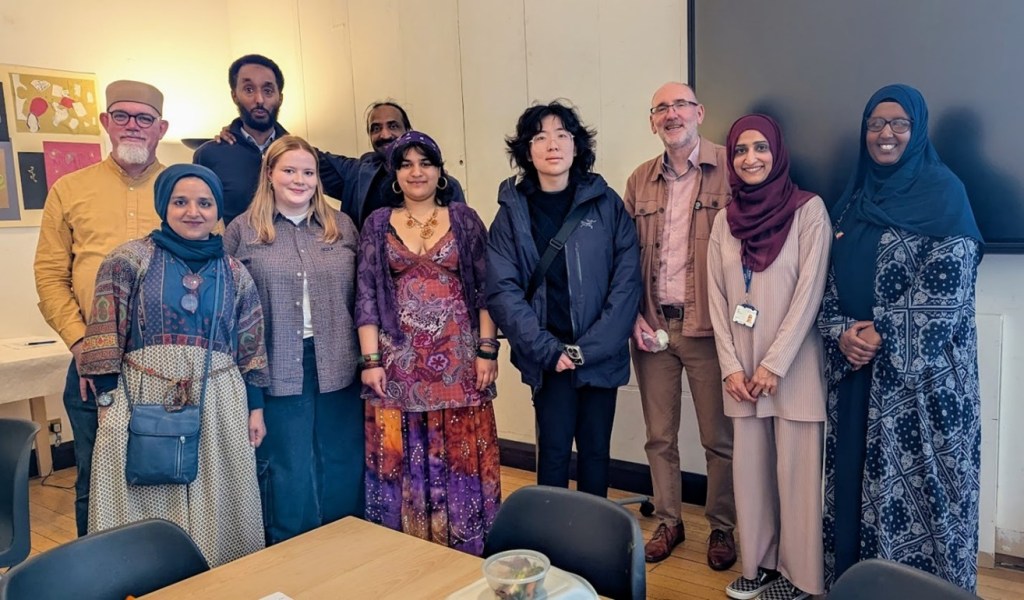
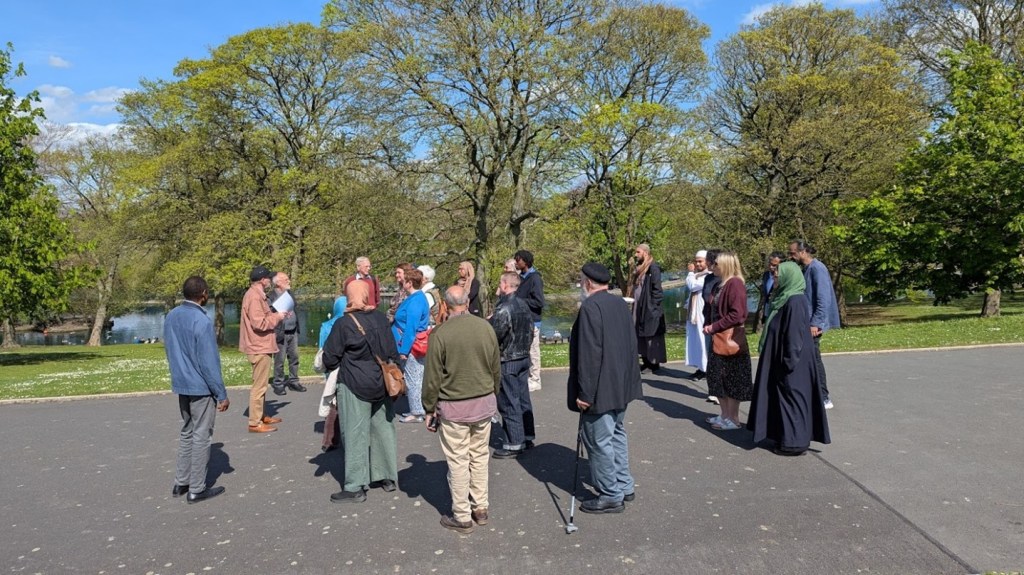
Left to right: Yahya Birt, Fozia Bora, Mussa Awaleh, Beka Edington, Razwan-ul-Haq, Freya Duncan, Haiyi xie, Chris Gaffney, Sofia Fallon, and Zainab Nur.
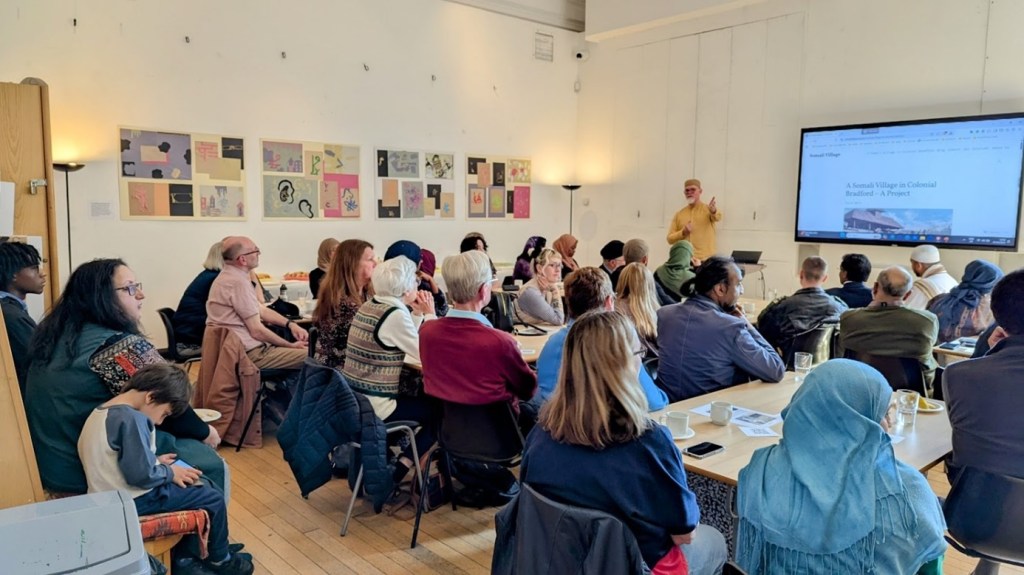
The location may seem unusual from a Somali perspective, as today there isn’t a large Somali community in Bradford, but it is historically significant. One of the Somali Carwo (an ethnographic troupe), consisting of 57 men, women and children, was housed for six months in a ‘model village’ built in Lister Park during the great Bradford Exhibition of 1904. 2.4 million people came to the Exhibition, and over 350,000 paid extra to see the Somalis, a daily average of 2000. Profits from the Village were passed on to Cartwright Hall to help pay for its founding art collection. In the words of one participant at the launch, it is this “complex, difficult and lost history” that the project addresses through research and education. One member of the Village, Halima Abdi Bedel, succumbed to a long-standing illness and is buried in the city’s Scholemoor Cemetery, marking Bradford’s first-known Muslim burial.
The Somali Village Chair, Zainab Nur, talked about the importance of Somali history in the UK, which stretches back 150 years, and how the new organisation will promote it further. Community historian Yahya Birt talked about how the website is a portal not just for research but to call for people to share their memories and interpretations. Dr Fozia Bora and Professor Chris Gaffney talked about how they teach on the history Somali Village to undergraduates in Leeds and Bradford universities through history/archives and archaeology respectively.
Following lunch, a tour was conducted around Lister Park to show the original location of the Village. The day concluded with a collective reflection on how to share this history in Bradford’s schools and cultural institutions, how to mark the Village in Lister Park and how this research will impact the city’s narrative, in the context of the city’s colonial and postcolonial past and present, and delving in particular on the Somalis as Bradford’s earliest Muslim community, a point that resonates deeply with the local population in Manningham. Feedback on the event was positive and encouraging, with participants finding it highly informative, inspirational and marking a new chapter in Bradford’s self-understanding as a city of many cultures and many waves of diverse forms of migration.
For the Somali community, the launch of the new organisation is similarly an important moment, as a collaborative group of researchers, educators, curators and artists come together to piece together the different strands of Somali history across the UK.
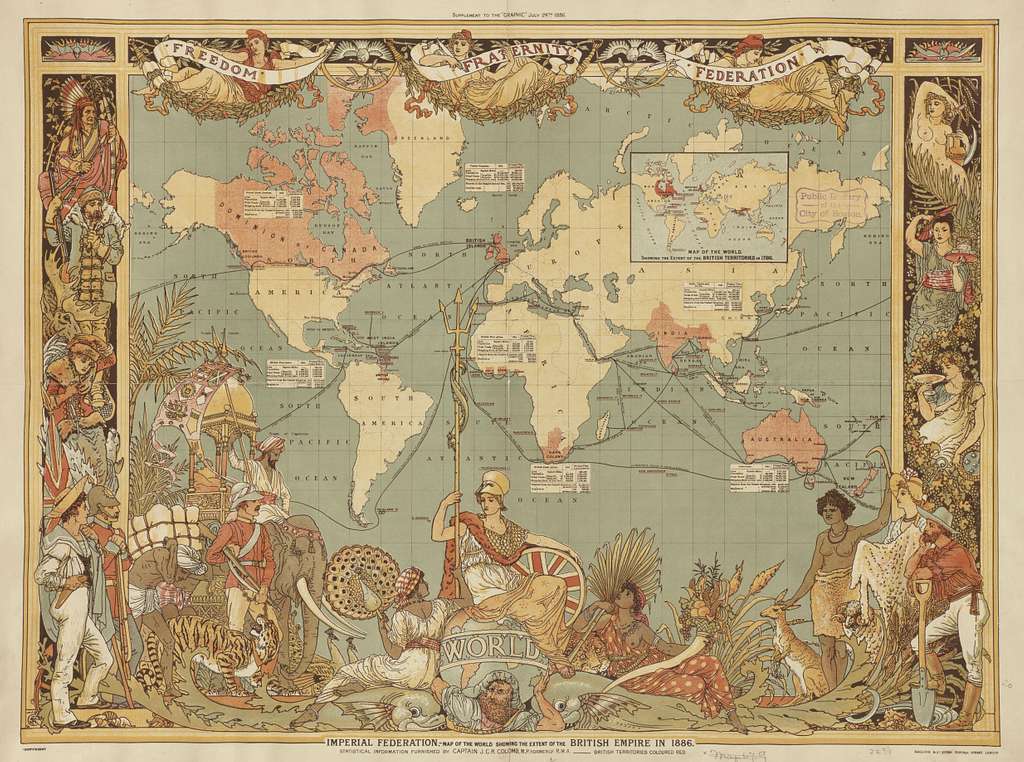
Imperial Federation, Map of the British Empire in 1886. Source: Picryl, under a Creative Commons licence.
Missionary work has long functioned as a means through which influence, recognition, and authority could be projected beyond local and national boundaries. Although this is often understood in relation to large denominations or imperial states, it was also significant at a regional level, enabling local communities to participate in, and derive status from, global missionary networks.
In the early stages of researching this blog post, I was struck by the kinds of material that dominated both academic research and online search results. Yorkshire’s missionary “successes”, including influential individuals and prominent organisations, were relatively easy to locate. By contrast, the more uncomfortable dimensions of Christian missions, colonial legacies, and imperial exhibitions proved far less visible. As with many aspects of historical memory, difficult subjects are often obscured, allowing societies to forget and move on rather than confront and process them fully. As Zeger Verleye argues, colonial shame or guilt can threaten the security of a nation’s self-identity (2021, p. 5). Given the historical and continuing significance of Christianity within Britain, it is unsurprising that a topic capable of destabilising so central an element of British identity has often been marginalised.
This tension between colonial guilt and Yorkshire’s involvement in Christian missions has led me to frame my research through the connected concepts of pride and shame. In her study of Christianity and colonialism, Hilary Carey identifies competition as one of the key reasons why ordinary people supported colonial missions (2011, pp. 17, 83, 379). She argues that denominations and nations sought to present themselves as especially powerful or influential, and this framework can also be applied to regions such as Yorkshire. As attitudes have shifted in the present, it is no longer possible to place uncritical pride in colonial missions. Instead, I argue that new forms of local pride have emerged through missionary work, centred on ethical practice, innovative thinking, and local origins. Yet, while these positive outcomes matter, they must be understood alongside the colonial legacies that helped to produce them.
This blog post therefore examines some of the key positive outcomes that Christian missions brought to Yorkshire, considering how they have been presented in ways that continue to reinforce local pride. It also addresses the less visible dimensions of missionary activity, arguing that these have received less public attention because they are bound up with colonial shame.
Individuals were central to Yorkshire’s role in Christian missions because they enabled the region to establish a presence within wider missionary networks. In doing so, they generated local recognition and pride for the communities from which they came. Their achievements were often reported in local newspapers, where they were presented as causes for communal celebration. William Dawson (1771‒1841), born in Garforth near Leeds, was a Yorkshire farmer and colliery steward who became a prominent lay preacher. Funds were raised to allow him to become a full-time preacher in 1837, with much of his work directed towards the support of foreign missions (Lowther, 1900, p. 229). This was undertaken with the hope that ‘his usefulness [would] be increased, and extended to every part of the land’ (Christian Retrospect, 1836, p. 311). For a small town, the ability to claim a connection to the London missionary scene and to participate indirectly in global mission would have been highly significant.
Individuals could also create enduring local legacies. James Hudson Taylor (1832‒1905), for instance, is regarded as a pioneering figure in the history of missionary work. Originally from Barnsley, Taylor founded the China Inland Mission in 1865, which Lam argues established a model for later missionary practice (2016, p. 1). He has since become a major source of local pride, appearing in newspaper articles and commemorated through cultural landmarks such as walking tours and blue plaques (Barnsley Chronicle, 2018; James Hudson Taylor, 2018; BBC South Yorkshire, 2012).
Missionary organisations similarly enabled local communities to establish enduring global connections and expand their influence. For example, the Starbeck Mission, founded in Harrogate in 1886, began as a local mission and today undertakes missionary work across Africa and Asia (Starbeck Mission). Such organisations often developed from local initiatives into globally active institutions. Their capacity to gain support within a community and use that support to pursue wider aims demonstrates how local areas could cultivate a shared sense of pride and purpose through global engagement. This phenomenon has continued beyond the formal decolonisation of the British Empire in the mid-twentieth century. Consequently, when these missions are understood as sources of local pride today, it is essential to acknowledge and critically reflect upon their colonial origins rather than allowing them to remain obscured.
In the Victorian period in particular, missions generated local pride not only through the work of missionaries themselves but also through their significance within community life. Missionary ideals were embedded in popular and educational culture across age groups. For example, Sabine Baring-Gould (1834‒1924) wrote hymns and songs such as “Now the Day is Over” and “Onward Christian Soldiers” for children at a missionary school in Yorkshire, both of which emphasised themes of duty and purpose (Hahn, 2015). Mission was therefore woven into everyday life, including education, and helped to foster a shared sense of communal purpose.
A less publicised aspect of this popular culture, however, was the public promotion and display of missionary activity. Missionary exhibitions became part of popular culture by presenting missions in ways that justified their aims and fostered positive public attitudes towards them. Although the evidence is somewhat limited, exhibitions displayed artefacts from countries visited by missionaries, including The Great Missionary Exhibition in Sheffield (1901) and Africa and the East in Bradford (1925) (National Trust, n.d.; Anon, 1925). Groten (2019) argues that such exhibitions formed part of a wider culture of imperial propaganda that represented those encountered by missionaries as uncivilised. Despite this, Meyer and Pels (2025) note that missionary collections and exhibitions have received comparatively little attention within scholarship on the displacement of objects during colonialism.
This context is significant for understanding the Somali Village. This blog post has sought to provide further background to the colonial setting of Yorkshire in which the Somali Village took place. Religion was an important tool for legitimising Britain’s imperial role, often framing it as a “civilising” mission. For example, Muhammad ibn Abdullah Hassan (1856‒1920), the anti-colonial leader and religious scholar, was represented as uncivilised and threatening to British imperial interests; by contrast, the Somali Villagers in Lister Park were depicted as loyal colonial subjects.
Religion also played a significant role in the Somali Village, with religious practice heavily emphasised in both the exhibition and press coverage. This emphasis was likely shaped by the perception of Somali religious practice as a subject of curiosity or spectacle within a predominantly Christian national context. As Freya Duncan (2025) argues, media representations of religion were carefully constructed to create distance between observers and the Somali people, while also identifying selected points of similarity. This dynamic was also reflected in the emphasis that the Somalis themselves placed on similarities between Islam and Christianity during press coverage of a Friday prayer service at the Village on 21 May 1904. The carefully curated lens through which the Somali people, and particularly their religion, were presented as inferior was integrally connected to how colonial Christianity was justified, viewed, and represented as a civilizing mission.
Religion and mission therefore also functioned as mechanisms of legitimacy and justification. Mwombeki argues that “colonialism and Christian mission had a symbiotic relationship”, in which each served the interests of the other, with missions supporting colonialism and colonialism facilitating the expansion of missions (2025, p. 390). Mwombeki’s argument can be extended to the Somali Village, where colonialism and ethnographic display in the context of religious differences may also be understood as operating in a similarly symbiotic relationship.
Primary Sources
Anon 2008. Life in Edwardian Tickhill: based on extracts from The Parish Magazines, Tickhill and District Local History Society, 5, pp. 1‒23.
Anon 1925. ’Africa and the East’ : C.M.S. Missionary Exhibition, Drill Hall, Manningham, Bradford, October 7th to 21st, 1925. Bradford: H.H. Tetley.
Hahn, D. 2015. BARING-GOULD, Sabine (1834-1924). The Oxford Companion to Children’s Literature. [Online].
Groten, M. 2019. Difference Between the Self and the Heathen. European Imperial Culture in Dutch Missionary Exhibitions, 1909–1957. The Journal of Imperial and Commonwealth History. [Online]. 47(3), pp. 490‒513. [Accessed 20 March 2026]. Available from: https://doi.org/10.1080/03086534.2018.1539725
Lam, J. 2016. From Holy Striving to Wholly Abiding: Mystical Transformation in James Hudson Taylor (1832-1905). HTS Teologiese Studies/Theological Studies. [Online]. 72(4), pp. 1–7. [Accessed 20 March 2026]. Available from: http://dx.doi.org/10.4102/v72i4.3483
Lowther, W.M. William Dawson. Dictionary of National Biography. 1885-1900, 14, p. 229
Meyer, B & Pels, P. 2025. Unpacking Missionary Collections. Material Religion. [Online]. 21(3), pp. 231‒243. [Accessed 20 March 2026]. Available from: https://doi.org/10.1080/17432200.2025.2505307
Mwombeki, F. 2024. The Berlin Conference: A Landmark in the Relationship between Colonialism and Mission in Africa. International Review of Mission. [Online]. 113(2), pp. 390‒404. [Accessed 11 March 2026]. Available from: https://doi.org/10.1111%2Firom.12516
Verleye, Z. 2021. The Lumumba Commission (1999-2002): Shame, Guilt, and the Post-Imperial Self. Journal of International Studies. [Online]. 50(1), pp. 3‒28 [Accessed 11 March 2026]. Available from: /doi.org/10.1177/0305829821105
Ellie Boyce produced this blog post as an output of her module FOAH2002 Student Research Partnerships, part of the BA in Liberal Arts at the University of Leeds, during a placement with the Somali Village in Colonial Bradford project in the academic year 2025–26.
As the world’s first UNESCO City of Film, Bradford has a significant heritage as a centre of film production (Bradford City of Film, 2008). Cinema’s role in shaping public perception is well established. As the pervasive racism of early Hollywood receives greater attention, scholars have also increasingly examined the racist and colonial tones of early British and European cinema (see Deroo and Fournié, 2011). Bradford’s 2008 bid for recognition as a City of Film openly acknowledged cinema’s colonial links. It noted, for example, the government-run Imperial Film Company’s operation from Bradford Town Centre Offices, local screenings of its films, and the ways films of Bradford captured twentieth-century colonial symbolism, for example, Mitchell and Kendall’s famous recording of the 1902 Coronation Procession, featuring wagons representing India and Canada (Bradford City of Film, 2008; Smith, 2026a). It also acknowledged the legacy of the less well-known media that helped shape early cinema’s colonial content, the “magic lantern slides”, which were also an influential medium in their own right (De Weerdt, 2023).
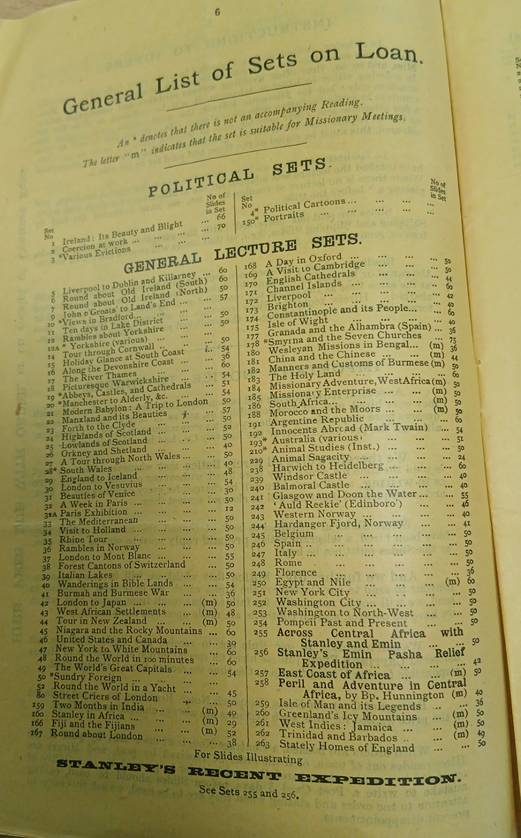
West Yorkshire Archives. 61D95/14/ box1/23 -Riley Brothers, Cheapside, Bradford, hire list of magic lanterns and lantern slides [1890]
Developed in the seventeenth century, magic lanterns were projectors that enabled small glass slides to be shown to a large audience (De Weerdt, 2023). Originally used for religious instruction, they later became a versatile and diverse medium, used as stand-alone entertainments and to illustrate lectures in a variety of settings, from churches and schoolrooms to music halls and fairgrounds, often blurring the boundaries between entertainment and education in both the presenter’s intent and the audience’s reception (De Weerdt, 2023; MacKenzie, 1984). This diversity made magic lantern slides easy to adapt to a variety of colonial purposes: dioramas of colonised places promoted emigration; images of “primitive” peoples illustrated missionary appeals and meetings; and entertainments could draw on racist humour and colonial adventure narratives, all of which created a blueprint for the presentation of colonialism in later cinema (MacKenzie, 1984).
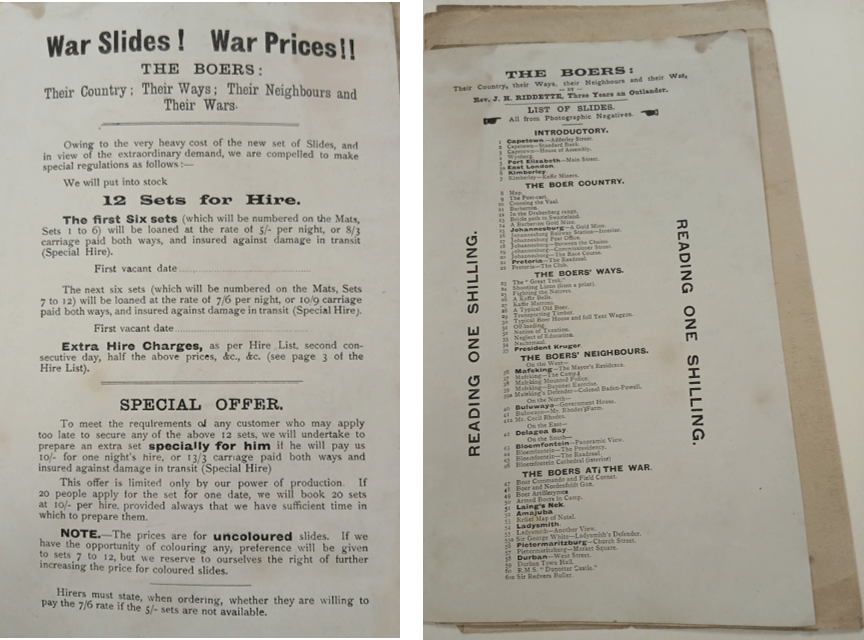
West Yorkshire Archives. 69D75/1 – Advertisement for Boer War lantern slides by Riley Brothers Limited of Bradford,1899
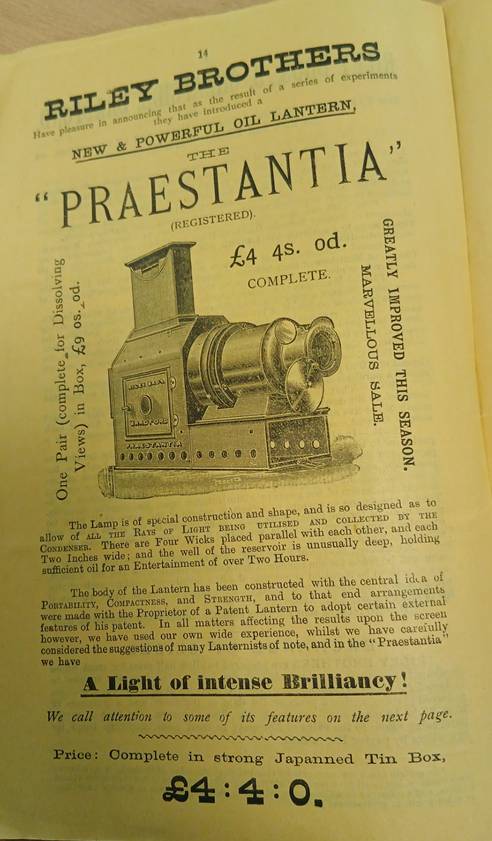
Bradford not only hosted such magic lantern shows, but was a centre for their production and distribution. Bradford was home to the Riley Brothers, a successful magic lantern company which rented slide sets, magic lanterns, and accessories to the public, claiming to have the world’s largest collection of slide sets (Bradford City of Film, 2008). Keen to meet public demand for information and entertainment related to colonial warfare, the company commissioned new slide sets on South Africa and the Boer Wars in 1899 (Riley Brothers, 1899). Bradfordians’ continued interest in the Boer Wars and South Africa can be seen in later, more public spectacles, such as the Savage South Africa Show in 1901, the Coronation celebrations in 1902, and the Buffalo Bill show in 1903 (Smith, 2026a, 2026b).
Although magic lanterns clearly shaped popular understandings of colonialism and contributed to the development of cinema, their distinctive role in religious and educational contexts also deserves emphasis. The Riley Brothers’ business demonstrates magic lanterns’ continued association with religion and education. Missionaries were among their target customers. Their catalogue marks slide sets as suitable for missionary meetings with an “M”, and they created a cheap loan system to encourage more rentals from religious organisations (Riley Brothers, 1890). Ellie Boyce (2026) has written on the importance of missionary work in Bradford’s links to colonialism, demonstrating the significance of magic lantern slides to Bradford’s colonial links beyond their relationship on cinema. The Riley Brothers also catered to educational institutions, offering to support teachers in finding lecturers to deliver their slides, and had educational sets explaining the colonial provenance of tea (Riley Brothers, 1890). MacKenzie (1984) argues that education about everyday objects was seen as a way to encourage children to recognise the Empire’s importance in their daily lives. The Riley Brothers’ emphasis on missionary work and education demonstrates the significance of the magic lantern in diffusing imperial doctrines beyond its contribution to cinema.
West Yorkshire Archives. 61D95/14/ box1/23 -Riley Brothers, Cheapside, Bradford, hire list of magic lanterns and lantern slides [1890]
Magic lantern slides helped to reinforce different colonial projects in Bradford and further afield, rallying (already enthusiastic) support for the Boer Wars and supporting colonial missionary work and children’s education on the British Empire. This distinct contribution should be considered alongside magic lanterns’ role in the development of cinema, and the wider connection between visual culture and empire that Bradford has rightly acknowledged (De Weerdt, 2023, Bradford City of Film, 2008).
Deroo, É. and Fournié, P. 2011. ‘From postcard to cinematograph: inventing reality’, in Blanchard, P. et al (eds.) Human zoos: science and spectacle in the age of colonial empires. Liverpool: Liverpool University Press, pp. 287–296.
MacKenzie, J.M. 1984. Propaganda and Empire: The Manipulation of British Public Opinion, 1880-1960. Manchester University Press.
Riley Brothers. 1890. Season 1890-91 Hire List. Magic Lanterns and Lantern Slides From Riley Brothers.
Riley Brothers. 1899. War Slides! From Riley Bros. Ltd. Bradford. [Advert].
With thanks to the West Yorkshire Archive Service, Bradford, for permission to republish these images.
Rowanne Smith studies Liberal Arts at the University of Leeds, majoring in Philosophy. Born and raised in West Yorkshire, the story of the Somali Village is close to home for her.
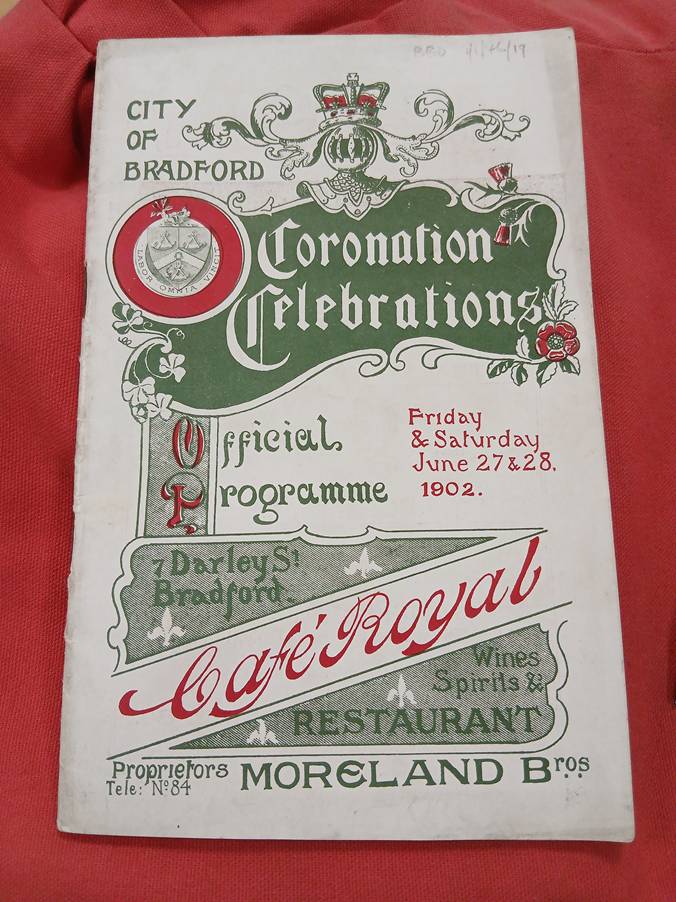
West Yorkshire Archive Service, Bradford. BBD1/1/46/19 – Programme of 1902 Coronation celebrations in Bradford
Mitchell and Kenyon’s film of the Bradford procession celebrating Edward VII’s coronation in June 1902 is now recognised as an important piece of cinema history (Bradford City of Film, 2008). It is described by the British Film Institute as:
A good starting point for any work on the British Empire and the place of the monarchy at the turn of the century… this roll succinctly summarises the place of Empire — within publicly staged versions, at least — in Britain’s sense of national identity. Two very different parts of the Empire, Canada and India, appear in the procession represented by ethnic stereotypes. (BFI Screenonline, 2004-13)
However, this brief description captures only a fragment of the colonial symbolism embedded in Bradford’s coronation celebrations. In the rest of this blogpost, I shall outline further how the procession highlighted various aspects of the city’s connections to the British Empire.
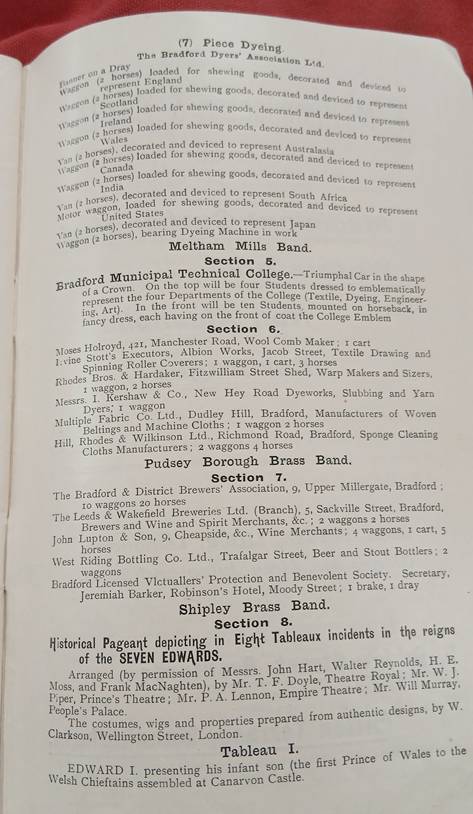
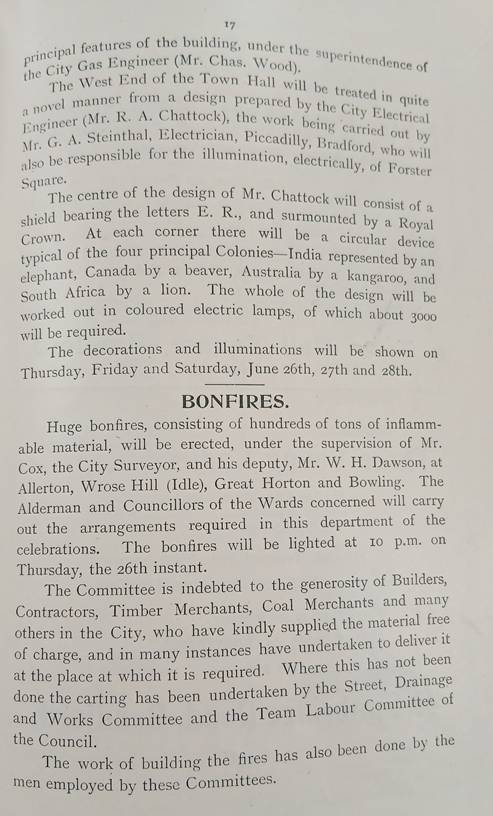
The procession itself did not just feature Canada and India; the same “section”, managed by the Bradford Dyers’ Association, also had waggons representing South Africa and Australia, described as “the four principal colonies” (City of Bradford, 1902a, p.17). Interestingly, Japan and the United States were also represented, with the United States further singled out by being represented by a motor car, while all the other floats were horse-drawn. The Bradford Dyers’ Association warrants further research, given its evident influence and international reach, operating internationally in Egypt, the United States, Canada (Greenhalf, 2012) and China (BFI, 2026), and were awarded a whole, stocked section in the procession. The floats may have celebrated the Association’s places of operation, while also gesturing towards desired trade relationships with the United States and Japan. Further information on their operations, influence and motivations could illuminate this organisation’s place in Bradford and international economic systems.
West Yorkshire Archive Service, Bradford. BBD1/1/46/19 – Programme of 1902 Coronation celebrations in Bradford
Throughout the coronation celebrations, particular emphasis was placed on the “principal colonies”: settler colonies with increasing administrative independence, later known as ‘dominions’ (Encyclopedia Britannica, 2026). Bradford’s illuminations included symbolic representations of each colony, with “India represented by an elephant, Canada by a beaver, Australia by a kangaroo, and South Africa by a lion”. Explicit references to colonial projects in India were also central to the celebrations. For example, after the Mayor’s “treat” to veterans, select veterans joined the procession. However, participation was highly selective: only medal-holders were accepted, most of whom were veterans of the Crimean War and the “Indian Mutiny”. Though calls had been made in the local press for veterans of the Boer War, insufficient responses led to their exclusion from the procession, although they were invited to the dinner (City of Bradford, 1902b). While several mayoral treats were held, the other guests were excluded from the procession, though schoolchildren were gathered for a performance of “God Save the King”. The structure of the procession suggests that the commemoration of colonial warfare, framed through civic pageantry, was a significant priority for the organisers.
West Yorkshire Archive Service, Bradford. BBD1/1/46/19 – Programme of 1902 Coronation celebrations in Bradford
Bradford’s coronation celebrations drew together official, military and commercial expressions of empire. The economic and ideological motivations and implications of these elements should be explored further through study of the Bradford Dyers’ Association. There is also limited publicly available information about the coronation celebrations of 1911, though these were likely to have been much smaller as the King did not visit Bradford.
Bibliography
Bradford City of Film. 2008. History and Heritage. [Online]. [Accessed 19th January 2026]. Available from: Layout 1
With thanks to the West Yorkshire Archive Service for permission to republish images of the coronation booklet.
Rowanne Smith studies Liberal Arts at the University of Leeds, majoring in Philosophy. Born and raised in West Yorkshire, the story of the Somali Village is close to home for her.
John MacKenzie (1984) argues that British imperial propaganda was produced not only by the state but also through private, commercial, and popular cultural forms. Although these forms could conflict with official policy or embarrass colonial administrators, their cumulative effect was often to reinforce imperial ideology, including racial hierarchy and the claimed moral and economic benefits of empire. Public reception is difficult to measure, but the prevalence of imperial propaganda ensured repeated exposure to official narratives (MacKenzie, 1984). Two colonial spectacles staged in Bradford — Frank Fillis’ Savage South Africa Show and Buffalo Bill’s Wild West — demonstrate how private entertainment could both unsettle and ultimately support British imperial aims (Birt, 2025; Warsame, 2022).
In 1901, Valley Park football fields hosted Frank Fillis’ nationally popular “Savage South Africa Show”, a reenactment of the contemporary Boer war, interest in which had been reignited by recent increased campaigns; indeed, in Bradford it sold more than 50,000 tickets in the first week, and 20,000 on the final day of a three-week stay (Alvin, 2024). The show simultaneously reinforced and conflicted with official imperial aims. Divided into two parts, the first focused on general entertainments, while the second was dedicated to Boer war re-enactments, beginning with a Matabele war scene was followed by a re-enactment of the massacre of British Major Wilson’s troop and ending with a restaging of the British victory at the Battle of Elandslaagte (Alvin, 2024). During the interval, visitors could visit the living quarters of the ethnographic performers.
This turned out to be the most controversial aspect of the show: the press sexualised the indigenous South African performers, a common reaction to ethnographic shows in the national and local press, with the Bradford Daily Telegraph reporting that the performers were not visible to the public outside of performance times, claiming this was “no doubt from the natural fear that their charm would be destructive to the female heart” (in Alvin, 2024). The sexualization of the performers was so emphasized that some London showground owners banned British women from entering the “village” section of the show, which Fillis opposed (Shepherd, 1986). The most objectified performer was Peter Lobengula, who claimed descent from the Matabele royal family, and left the show to marry a white woman, Kitty Jewell (Mohamed, 2023), heightening the press’ emphasis on his appearance and domestic conduct. This objectification echoes today, with Alvin’s (2024) account of the trial presenting a bipolar characterization of Lobengula based on press accounts, in which he is simultaneously an abusive, adulterous alcoholic, and a charming, well-dressed, happy and loving husband.
The sexualisation of ethnographic performers was encouraged by ethnographic showrunners for its perceived crowd-drawing ability, however, the line between sexualised observation and actual social and physical intimacy was heavily policed (Shepherd, 1986; Andreasson, 2016). This may have been based on showrunner’s own objections to interracial relationships, an attempt to defend their show from negative press, or because a performer’s marriage often signalled the end of their performing career as they settled down with their new spouse (Shepherd, 1986; Andreasson, 2016). Relationships between ethnographic performers and white women were particularly resisted by colonial officials, who feared the rhetoric of racial hierarchy would be undermined (Shepherd, 1986; Andreasson, 2016). Thus, relationships between white Europeans and ethnographic performers were both against the showrunners’ interests and undermined imperial efforts to police race. However, as the performers’ sexualisation helped to underscore the difference between performers and white observers, it also reinforced the ideology of racial hierarchy (Andreasson, 2016). Prince Lobengula and Kitty Jewell’s marriage undermined rhetoric of racial difference and the behavioural expectations of white women (Mohamed, 2023), but their unhappy marriage and divorce was taken as vindication of this same rhetoric (Alvin, 2024). Thus, the contradictory effects of encouraged, but policed sexualisation from ethnographic showrunners and the warnings of official imperial ideology, were ultimately reconciled in their reinforcement of the racial and gender hierarchy.
The Savage South Africa show practically and ideologically frustrated South African administrators, who worried the indigenous South African performers would be morally degraded by their sexualization and their access to alcohol and entertainment while on tour, which they thought would encourage disrespect and disobedience to the white colonizers (Alvin, 2024). Similar to the administrative acrobatics of the Somali Village, the South African ethnographic performers’ travel documentation frustrated the colonial government; Joseph Chamberlain, Secretary of State for the Colonies, told the House the performers had been granted travel passes for work, but whether this was in mining or performance had not been made explicit (Alvin, 2024). Fillis later claimed he had a contract with Cape Government, but this was ambiguously worded, and his advertising mocked the colonial administration and celebrated his outwitting of it, claiming: “We have the material which other proprietors cannot secure, on account of the opposition of the Cape Government. We have with us the real article.” (in Alvin, 2024, p.4). Thus, the Savage South Africa show, in demonstrating British military might and encouraging the dehumanisation of indigenous South Africans, reinforced official imperial aims, while simultaneously ideologically and practically undermining the South African colonial administration.
Another ambiguous colonial spectacle, the Bufallo Bill show, was performed in Bradford on the 5th and 6th October 1903, proving highly popular despite poor weather (Welbourne, 2023). The show promoted American imperialism, which, having concluded its conquest of territories in North America, was looking outwards, thus increasingly seen as an ideological, economic and security threat to the British Empire (Flint, 2020), yet the show could still be harnessed for British imperial aims. The Royal Family tied itself to all the show’s British tours, beginning with Queen Victoria in 1887, taking the opportunity to promote British imperialism by contrasting its projected benevolence with the performers’ treatment by the showrunners (Flint, 2020). The British press and colonial administrators perpetuated this narrative of benevolence, juxtaposing the US’ government’s treatment of Native Americans with the “kind” administration of Canada (Flint, 2020). More generally, stereotypes of First Nations peoples could be conflated with other colonized groups and fitted into more basic, less political narratives of savage and primitive vs civilized and modern (Flint, 2020). The showrunners knew how to adapt their show to their audience, and how to win political and public support. The 1902-3 tour explicitly played into British colonial narratives, with publicist Major John Burke stressing the transformation of the West from the Wild West depicted in the show, to a grain-producing powerhouse, suggesting such productive economic transformations could be soon expected in Canada, South Africa and Australia (Flint, 2020). Crucially, the 1902-3 tour also incorporated a Boer War reenactment (Flint, 2020), linking the tales of colonial conquest in America and in South Africa, and flattering its British audience.
The Savage South Africa Show and Buffalo Bill’s Wild West therefore support MacKenzie’s (1984) argument that imperial propaganda did not need to be centrally controlled to serve imperial ends. Both spectacles generated tensions: they embarrassed administrators, depended on commercial sensationalism, and sometimes unsettled the racial boundaries they were meant to reinforce. Yet in Bradford they also translated empire into popular entertainment, giving local audiences accessible narratives of conquest, hierarchy, civilisation, and economic transformation. Their popularity cannot reveal exactly how audiences interpreted them, but it shows that provincial spaces such as Bradford were not peripheral to imperial culture. They were active sites where private spectacle helped make empire visible, consumable, and ideologically persuasive.
Bibliography
Alvin, N. 2024. Savage South Africa: The Prince, the Lion Skin and the Kidnapped Zulus. The Bradford Antiquary. 85. Pp.1-21.
Andreassen, R. 2016. ‘Gender, Sexuality and Romantic Relationships’. In: Human Exhibitions. London: Routledge. [Online]. Available from: https://www.perlego.com/book/1633232 [Accessed 14 March 2026].
Britain’s Human Zoos. 2023. [Film]. Nadifa Mohamed. dir. UK. Red Bicycle.
Flint, K. (2020). Chapter One Figuring America and Chapter Nine Buffalo Bill’s Wild West and English Identity. In: The Transatlantic Indian, 1776-1930. Princeton University Press. [Online] Available from: https://www.perlego.com/book/1351499 [Accessed: 12th March 2026].
MacKenzie, J.M. 1984. Propaganda and Empire: The Manipulation of British Public Opinion, 1880-1960. Manchester University Press.
Shepherd, B. 1986. Showbiz Imperialism: The Case of Peter Lobengula. In: MacKenzie, J.M. ed. Imperialism and Popular Culture. Manchester: Manchester University Press, pp 94-112
Warsame, B. 2022. “3. A Brief History of Staging Somali Ethnographic Performing Troupes in Europe, 1885–1930”. In: Demski, D. and Czarnecka, D. eds Staged Otherness: Ethnic Shows in Central and Eastern Europe, 1850–1939. [Online] Budapest, Hungary: Central European University Press, pp. 77-100. [Accessed 9th October 2025]. Available from: https://doi.org/10.1515/9789633864401-004
Rowanne Smith studies Liberal Arts at the University of Leeds, majoring in Philosophy. Born and raised in West Yorkshire, the story of the Somali Village is close to home for her.