Ellie Boyce
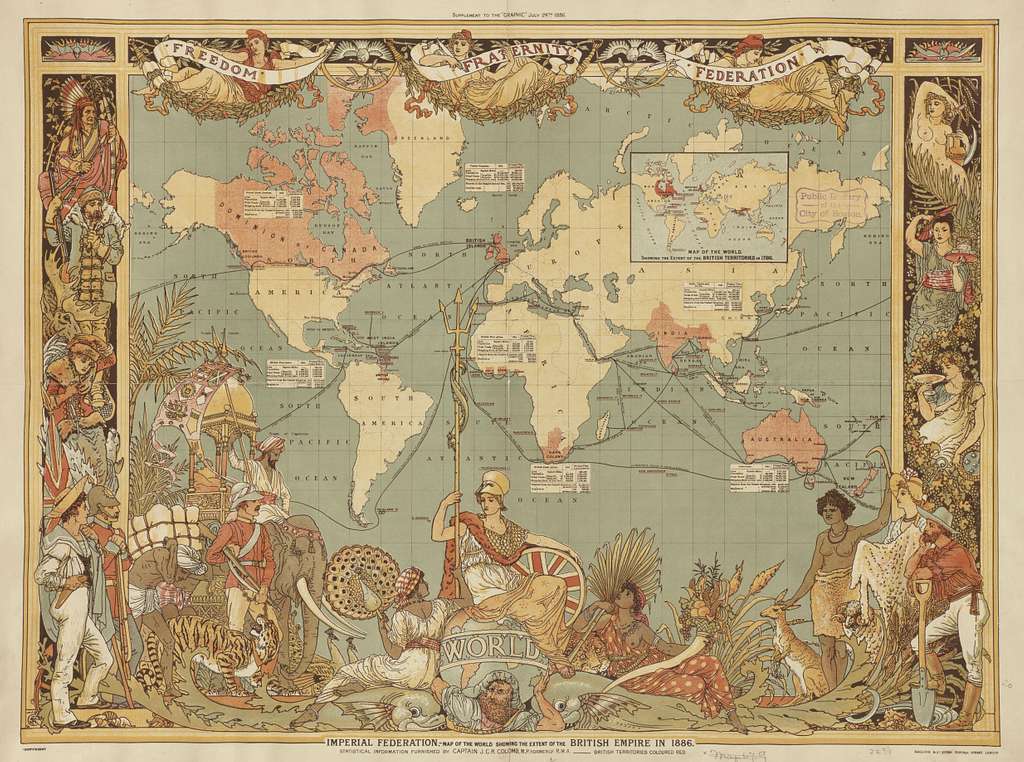
Missionary work has long functioned as a means through which influence, recognition, and authority could be projected beyond local and national boundaries. Although this is often understood in relation to large denominations or imperial states, it was also significant at a regional level, enabling local communities to participate in, and derive status from, global missionary networks.
In the early stages of researching this blog post, I was struck by the kinds of material that dominated both academic research and online search results. Yorkshire’s missionary “successes”, including influential individuals and prominent organisations, were relatively easy to locate. By contrast, the more uncomfortable dimensions of Christian missions, colonial legacies, and imperial exhibitions proved far less visible. As with many aspects of historical memory, difficult subjects are often obscured, allowing societies to forget and move on rather than confront and process them fully. As Zeger Verleye argues, colonial shame or guilt can threaten the security of a nation’s self-identity (2021, p. 5). Given the historical and continuing significance of Christianity within Britain, it is unsurprising that a topic capable of destabilising so central an element of British identity has often been marginalised.
This tension between colonial guilt and Yorkshire’s involvement in Christian missions has led me to frame my research through the connected concepts of pride and shame. In her study of Christianity and colonialism, Hilary Carey identifies competition as one of the key reasons why ordinary people supported colonial missions (2011, pp. 17, 83, 379). She argues that denominations and nations sought to present themselves as especially powerful or influential, and this framework can also be applied to regions such as Yorkshire. As attitudes have shifted in the present, it is no longer possible to place uncritical pride in colonial missions. Instead, I argue that new forms of local pride have emerged through missionary work, centred on ethical practice, innovative thinking, and local origins. Yet, while these positive outcomes matter, they must be understood alongside the colonial legacies that helped to produce them.
This blog post therefore examines some of the key positive outcomes that Christian missions brought to Yorkshire, considering how they have been presented in ways that continue to reinforce local pride. It also addresses the less visible dimensions of missionary activity, arguing that these have received less public attention because they are bound up with colonial shame.
Individuals were central to Yorkshire’s role in Christian missions because they enabled the region to establish a presence within wider missionary networks. In doing so, they generated local recognition and pride for the communities from which they came. Their achievements were often reported in local newspapers, where they were presented as causes for communal celebration. William Dawson (1771‒1841), born in Garforth near Leeds, was a Yorkshire farmer and colliery steward who became a prominent lay preacher. Funds were raised to allow him to become a full-time preacher in 1837, with much of his work directed towards the support of foreign missions (Lowther, 1900, p. 229). This was undertaken with the hope that ‘his usefulness [would] be increased, and extended to every part of the land’ (Christian Retrospect, 1836, p. 311). For a small town, the ability to claim a connection to the London missionary scene and to participate indirectly in global mission would have been highly significant.
Individuals could also create enduring local legacies. James Hudson Taylor (1832‒1905), for instance, is regarded as a pioneering figure in the history of missionary work. Originally from Barnsley, Taylor founded the China Inland Mission in 1865, which Lam argues established a model for later missionary practice (2016, p. 1). He has since become a major source of local pride, appearing in newspaper articles and commemorated through cultural landmarks such as walking tours and blue plaques (Barnsley Chronicle, 2018; James Hudson Taylor, 2018; BBC South Yorkshire, 2012).
Missionary organisations similarly enabled local communities to establish enduring global connections and expand their influence. For example, the Starbeck Mission, founded in Harrogate in 1886, began as a local mission and today undertakes missionary work across Africa and Asia (Starbeck Mission). Such organisations often developed from local initiatives into globally active institutions. Their capacity to gain support within a community and use that support to pursue wider aims demonstrates how local areas could cultivate a shared sense of pride and purpose through global engagement. This phenomenon has continued beyond the formal decolonisation of the British Empire in the mid-twentieth century. Consequently, when these missions are understood as sources of local pride today, it is essential to acknowledge and critically reflect upon their colonial origins rather than allowing them to remain obscured.
In the Victorian period in particular, missions generated local pride not only through the work of missionaries themselves but also through their significance within community life. Missionary ideals were embedded in popular and educational culture across age groups. For example, Sabine Baring-Gould (1834‒1924) wrote hymns and songs such as “Now the Day is Over” and “Onward Christian Soldiers” for children at a missionary school in Yorkshire, both of which emphasised themes of duty and purpose (Hahn, 2015). Mission was therefore woven into everyday life, including education, and helped to foster a shared sense of communal purpose.
A less publicised aspect of this popular culture, however, was the public promotion and display of missionary activity. Missionary exhibitions became part of popular culture by presenting missions in ways that justified their aims and fostered positive public attitudes towards them. Although the evidence is somewhat limited, exhibitions displayed artefacts from countries visited by missionaries, including The Great Missionary Exhibition in Sheffield (1901) and Africa and the East in Bradford (1925) (National Trust, n.d.; Anon, 1925). Groten (2019) argues that such exhibitions formed part of a wider culture of imperial propaganda that represented those encountered by missionaries as uncivilised. Despite this, Meyer and Pels (2025) note that missionary collections and exhibitions have received comparatively little attention within scholarship on the displacement of objects during colonialism.
This context is significant for understanding the Somali Village. This blog post has sought to provide further background to the colonial setting of Yorkshire in which the Somali Village took place. Religion was an important tool for legitimising Britain’s imperial role, often framing it as a “civilising” mission. For example, Muhammad ibn Abdullah Hassan (1856‒1920), the anti-colonial leader and religious scholar, was represented as uncivilised and threatening to British imperial interests; by contrast, the Somali Villagers in Lister Park were depicted as loyal colonial subjects.
Religion also played a significant role in the Somali Village, with religious practice heavily emphasised in both the exhibition and press coverage. This emphasis was likely shaped by the perception of Somali religious practice as a subject of curiosity or spectacle within a predominantly Christian national context. As Freya Duncan (2025) argues, media representations of religion were carefully constructed to create distance between observers and the Somali people, while also identifying selected points of similarity. This dynamic was also reflected in the emphasis that the Somalis themselves placed on similarities between Islam and Christianity during press coverage of a Friday prayer service at the Village on 21 May 1904. The carefully curated lens through which the Somali people, and particularly their religion, were presented as inferior was integrally connected to how colonial Christianity was justified, viewed, and represented as a civilizing mission.
Religion and mission therefore also functioned as mechanisms of legitimacy and justification. Mwombeki argues that “colonialism and Christian mission had a symbiotic relationship”, in which each served the interests of the other, with missions supporting colonialism and colonialism facilitating the expansion of missions (2025, p. 390). Mwombeki’s argument can be extended to the Somali Village, where colonialism and ethnographic display in the context of religious differences may also be understood as operating in a similarly symbiotic relationship.
Primary Sources
Anon 2008. Life in Edwardian Tickhill: based on extracts from The Parish Magazines, Tickhill and District Local History Society, 5, pp. 1‒23.
Anon 1925. ’Africa and the East’ : C.M.S. Missionary Exhibition, Drill Hall, Manningham, Bradford, October 7th to 21st, 1925. Bradford: H.H. Tetley.
Anon 2018. Barnsley missionary’s work lives on in China, The Barnsley Chronicle [Online]. 6 April. [Accessed 2 February 2026]. Available from: https://www.barnsleychronicle.com/article/13421/barnsley-missionarys-work-lives-on-in-china
James Hudson Taylor. 2018. Hudson Taylor Sites in Barnsley. [Online]. [Accessed 2 February 2026]. Available from: http://www.jameshudsontaylor.org.uk/trail.html
Anon 2012. Twin Plaques for Barnsley’s China Missionary. BBC News South Yorkshire [Online]. 21 May. [Accessed 2 February 2026]. Available from: https://www.bbc.co.uk/news/uk-england-south-yorkshire-18139123
Anon 1836. Christian Retrospect. The Wesleyan-Methodist magazine. 15, pp. 311–313.
National Trust. Religious Card. [Online]. [Accessed 20 March 2026]. Available from: https://www.nationaltrustcollections.org.uk/object/749468
Secondary Sources
Carey, H. 2011. God’s Empire: Religion and Colonialism in the British World, c.1801‒1908. Cambridge: Cambridge University Press.
Duncan, F. 2025. The Representation of the Somali Villagers’ Islamic Identity in the Bradford Weekly Telegraph. Somali Village. [Online]. 26 April 2025. [Accessed 20 March 2026]. Available from: https://somalivillage.org.uk/2025/04/26/the-representation-of-the-somali-villagers-islamic-identity/
Hahn, D. 2015. BARING-GOULD, Sabine (1834-1924). The Oxford Companion to Children’s Literature. [Online].
Groten, M. 2019. Difference Between the Self and the Heathen. European Imperial Culture in Dutch Missionary Exhibitions, 1909–1957. The Journal of Imperial and Commonwealth History. [Online]. 47(3), pp. 490‒513. [Accessed 20 March 2026]. Available from: https://doi.org/10.1080/03086534.2018.1539725
Lam, J. 2016. From Holy Striving to Wholly Abiding: Mystical Transformation in James Hudson Taylor (1832-1905). HTS Teologiese Studies/Theological Studies. [Online]. 72(4), pp. 1–7. [Accessed 20 March 2026]. Available from: http://dx.doi.org/10.4102/v72i4.3483
Lowther, W.M. William Dawson. Dictionary of National Biography. 1885-1900, 14, p. 229
Meyer, B & Pels, P. 2025. Unpacking Missionary Collections. Material Religion. [Online]. 21(3), pp. 231‒243. [Accessed 20 March 2026]. Available from: https://doi.org/10.1080/17432200.2025.2505307
Mwombeki, F. 2024. The Berlin Conference: A Landmark in the Relationship between Colonialism and Mission in Africa. International Review of Mission. [Online]. 113(2), pp. 390‒404. [Accessed 11 March 2026]. Available from: https://doi.org/10.1111%2Firom.12516
Starbeck Mission. c.2035. Available from: https://www.starbeckmission.com/missionary-work
Verleye, Z. 2021. The Lumumba Commission (1999-2002): Shame, Guilt, and the Post-Imperial Self. Journal of International Studies. [Online]. 50(1), pp. 3‒28 [Accessed 11 March 2026]. Available from: /doi.org/10.1177/0305829821105
Ellie Boyce produced this blog post as an output of her module FOAH2002 Student Research Partnerships, part of the BA in Liberal Arts at the University of Leeds, during a placement with the Somali Village in Colonial Bradford project in the academic year 2025–26.
 Somali Village