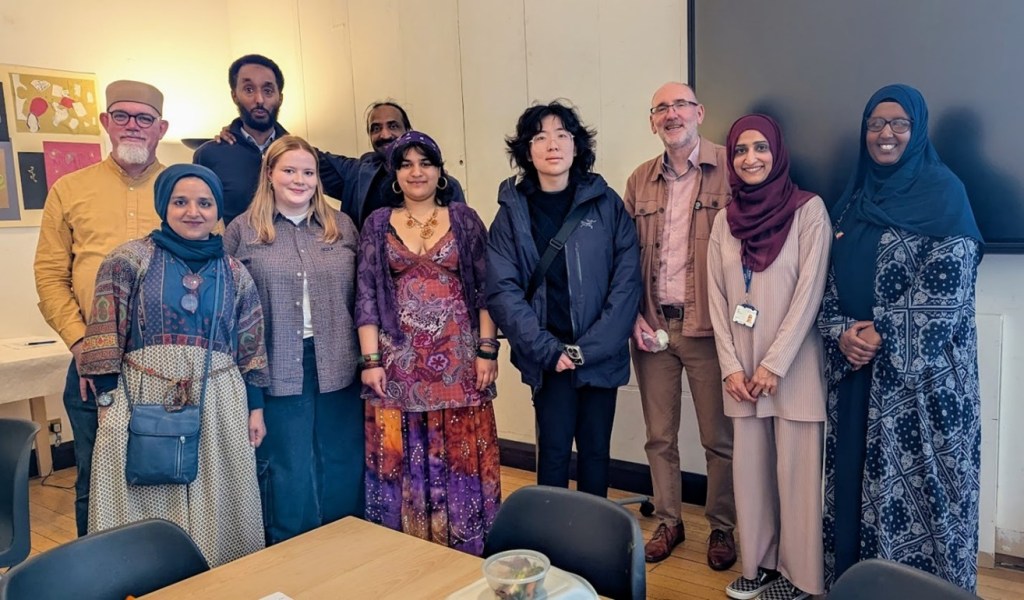
The Somali Village, a new national organisation to promote Somali history, culture and heritage in the Somali diaspora and for the general public, was launched in Bradford on Sunday 27 April 2025 at the historic Cartwright Hall during the City’s Year of Culture, at its main art gallery in Lister Park. A new website for Somali Village was launched <<somalivillage.org.uk>>, which introduced our first project, “A Somali Village in Colonial Bradford”. This project is a collaboration between Somali Village, the Universities of Leeds and Bradford, Bradford District Museums and Art Galleries, and Bradford2025.
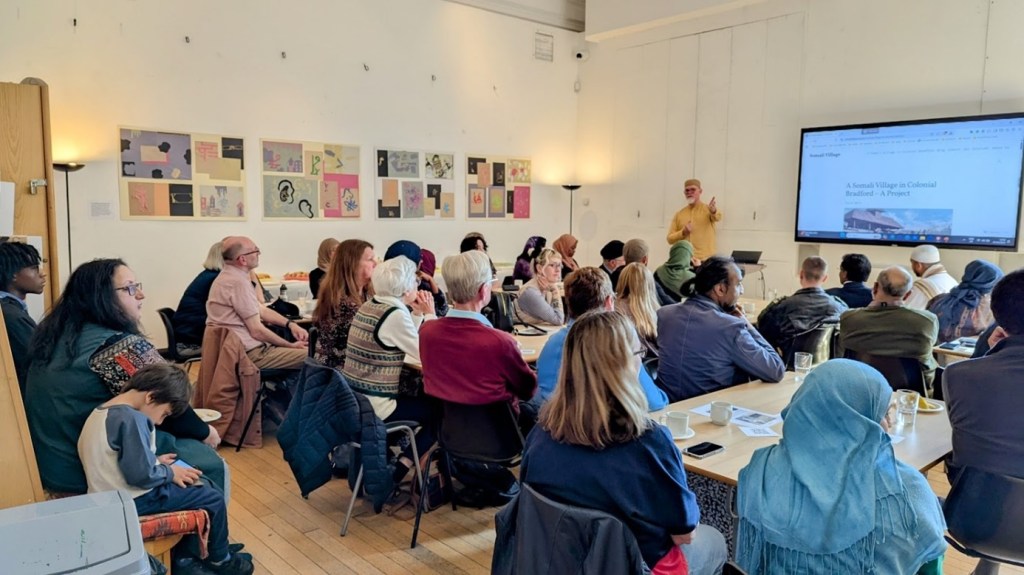
The location may seem unusual from a Somali perspective, as today there isn’t a large Somali community in Bradford, but it is historically significant. One of the Somali Carwo (an ethnographic troupe), consisting of 57 men, women and children, was housed for six months in a ‘model village’ built in Lister Park during the great Bradford Exhibition of 1904. 2.4 million people came to the Exhibition, and over 350,000 paid extra to see the Somalis, a daily average of 2000. Profits from the Village were passed on to Cartwright Hall to help pay for its founding art collection. In the words of one participant at the launch, it is this “complex, difficult and lost history” that the project addresses through research and education. One member of the Village, Halima Abdi Bedel, succumbed to a long-standing illness and is buried in the city’s Scholemoor Cemetery, marking Bradford’s first-known Muslim burial.
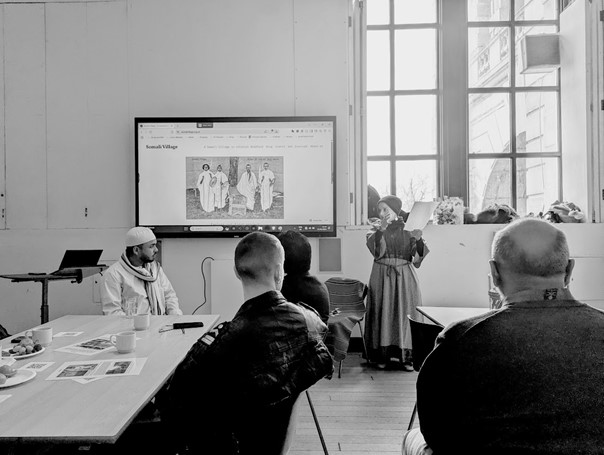
The Somali Village Chair, Zainab Nur, talked about the importance of Somali history in the UK, which stretches back 150 years, and how the new organisation will promote it further. Community historian Yahya Birt talked about how the website is a portal not just for research but to call for people to share their memories and interpretations. Dr Fozia Bora and Professor Chris Gaffney talked about how they teach on the history Somali Village to undergraduates in Leeds and Bradford universities through history/archives and archaeology respectively.
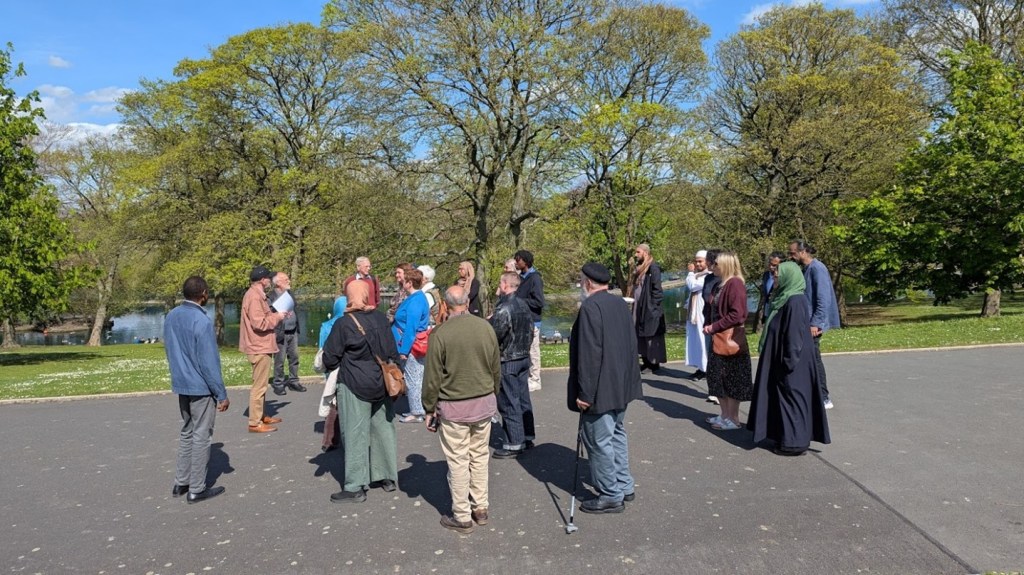
Following lunch, a tour was conducted around Lister Park to show the original location of the Village. The day concluded with a collective reflection on how to share this history in Bradford’s schools and cultural institutions, how to mark the Village in Lister Park and how this research will impact the city’s narrative, in the context of the city’s colonial and postcolonial past and present, and delving in particular on the Somalis as Bradford’s earliest Muslim community, a point that resonates deeply with the local population in Manningham. Feedback on the event was positive and encouraging, with participants finding it highly informative, inspirational and marking a new chapter in Bradford’s self-understanding as a city of many cultures and many waves of diverse forms of migration.
For the Somali community, the launch of the new organisation is similarly an important moment, as a collaborative group of researchers, educators, curators and artists come together to piece together the different strands of Somali history across the UK.

