Our Purpose and Aims
The purpose of Somali Village is to advance research, education, heritage, and artistic and cultural outputs relating to the history of the Somali diaspora in Britain and elsewhere, from the nineteenth century to the present day. It was established as a charity by the UK Somali community and partners in 2025. Our aims are
• To further research into the history and heritage of the Somali diaspora.
• To educate the public through a comprehensive programme of digital and print publications, seminars, conferences, workshops, and other educational activities focused on this history.
• To enhance the preservation, curation, and exhibition of archival materials, and to commemorate the history and heritage of the Somali diaspora in the physical landscape.
• To develop and promote the performance of the culture and arts of the Somali diaspora within the United Kingdom and internationally.
Our Values
Somali Village is underpinned by a steadfast commitment to authenticity and service. The charity values the preservation of meaningful historical narratives and seeks to empower the Somali diaspora by providing dedicated spaces for research into its history and heritage. In serving both the Somali community and the wider public, Somali Village champions inclusive projects that not only disseminate this rich heritage culturally by reflecting the needs of the Somali diaspora, but also seeks to foster greater intercultural understanding. Through its work, the charity aims to magnify the history and heritage of the Somali diaspora so that it is better understood, appreciated, and widely shared for the benefit of all.
Our Trustees
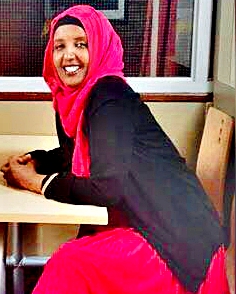
Zainab Nur (Chair) is a dedicated community activist with a lifelong passion for advocating for women’s and girls’ rights. She is the founder of Hayaat Women Trust, an African Diaspora women’s organisation based in Cardiff. Although she has since stepped away from the organisation, she remains committed to social justice and community empowerment. With 30 years of experience as a professional social worker in the public sector, she continues to support people’s rights and ensure access to public services. For the past decade, she has collaborated with arts organisations, museums, and other institutions to celebrate and preserve Somali heritage in Wales through creative arts. She organises cultural events that engage young people in theatre, dance, and storytelling, helping to foster a deeper connection to their roots. A well-respected and influential figure in her community, she is especially passionate about empowering young British Somali girls to learn about the arts. She actively encourages them to embrace their heritage by learning ancestral dances and participating in cultural performances, ensuring that Somali traditions remain alive for future generations.
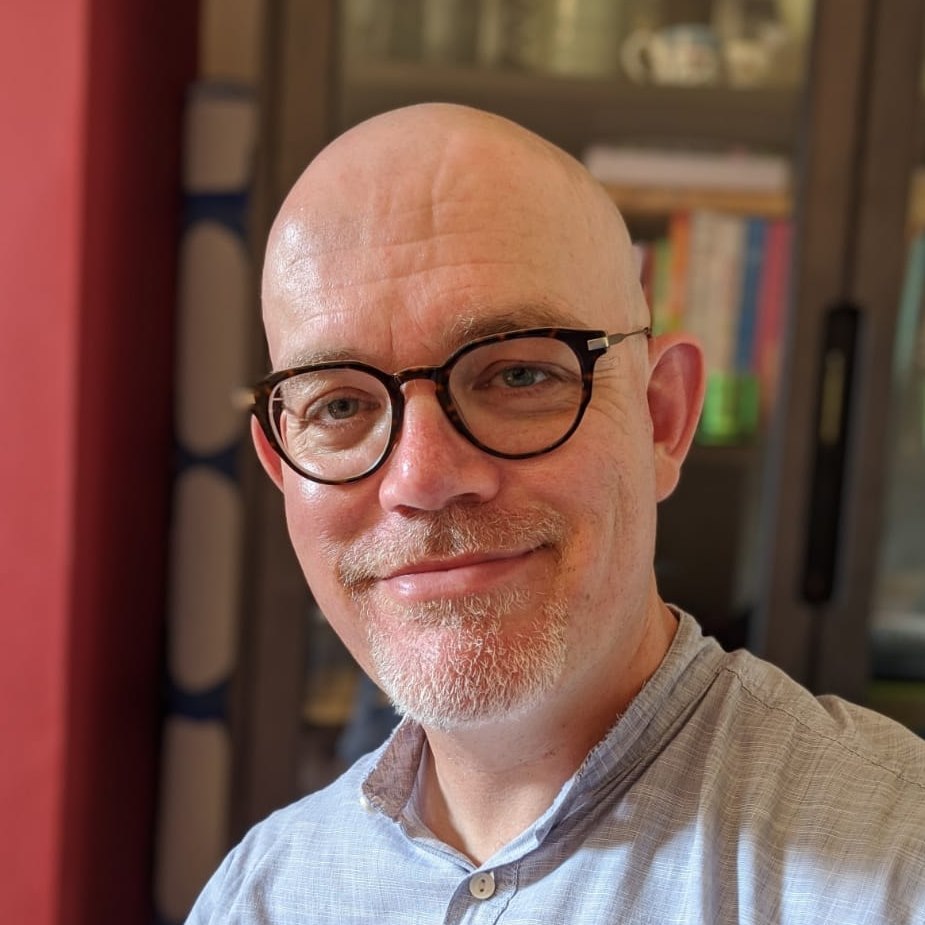
Yahya Birt (Secretary and Website Editor) is a community historian, who specialises in the early history of Muslims in Britain, alongside a quarter century of experience as a commissioning editor in publishing and a freelance editor. He has taught at the University of Leeds and has an M.Phil. in Social and Cultural Anthropology from the University of Oxford. He has published over a dozen peer-reviewed articles on Islam in Britain and his co-authored books include British Secularism and Religion (2016), Islam in Victorian Liverpool (2021), The Collected Poems of Abdullah Quilliam (2021) and Our Fatima of Liverpool (2023). More recently, he has spent a lot of time in the Yorkshire archive looking into the history of the Somali Village in the 1904 Bradford Exhibition, which is the city’s first Muslim community. He is a founding co-editor of the Oxford British Muslim Studies series at the Oxford University Press. He lives in Bradford with his family and three cats. He enjoys walking and being grumpy about the state of the world. He can be reached on X on @ybirt.

Mussa Awaleh (Treasurer) has worked across a range of roles in the not-for-profit sector. With over twenty years of experience in professional and voluntary roles, Mussa has been involved in community development activities focused on regenerating West London by addressing economic, social, environmental, and cultural issues. Mussa has been a mentor at the Somali Youth and Development Resource Centre (SYDRC), working with young Somalis who are keen to join the civil service. With extensive voluntary experience working with local authorities, Mussa advised the Council of Somali Organisations (CSO) on the challenges that young Somalis face navigating the criminal justice system to tackle the overrepresentation of young Somalis incarcerated in prisons across the UK. He is also a member of the Anglo-Somali Society and retains a keen interest in the historical relationship between the United Kingdom and the Horn of Africa nation. A proud Londoner, Mussa was drawn to the Somali Village due to its vital mission to reimagine the history of the Somalis in the UK. His alignment with the Somali Village’s ethos is rooted in his personal commitment to championing equity and creating opportunities for marginalised communities.

Abira Hussein (Trustee and Website Editor) is a researcher and curator specialising in digital heritage, focusing on Somali history and memory. She explores how technology, particularly virtual and mixed reality, can transform engagement with colonial-era archives and reconnect diasporic communities with their heritage. Abira is pursuing a PhD at University College London, where she investigates how participatory methods and digital tools can co-create new, community-driven archival spaces with Somali people in Britain, challenging dominant historical narratives and fostering inclusive, culturally rooted forms of remembrance. She also specialises in Somali heritage, digital archives, Open Culture and GLAM. She has worked with the Barbican, Magnum Photos, British Museum, The National Archives, and other organisations to deliver a number of projects and workshops engaging with the Somali Community, and researching the heritage sector. In 2017, she created the VR experience ‘Coming Home’ – in partnership with the British Museum and funded by Brighton Digital Festival and shown at Sussex Humanities Lab. In 2018, she developed in partnership with Mnemoscene the NOMAD project, a Mixed Reality experience that explored the creative use of immersive mixed reality and web-based technology to contextualise archival Somali objects with the people and traditions to which they belong.
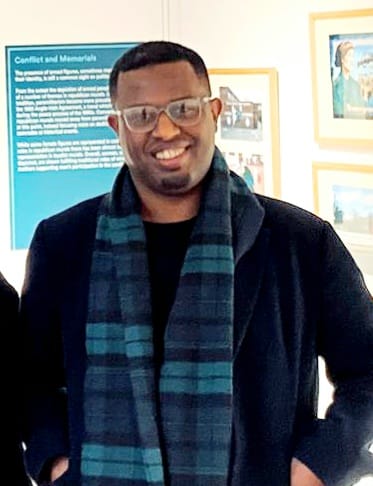
Nasir Adam (Trustee) is a cultural advocate based in Cardiff, Wales, he is the son and grandson of Somali merchant seamen. Over the past two decades, Nasir has been a dedicated campaigner for social justice, youth empowerment, Cultural democracy, and community development. Nasir works for the National Museum Wales as curator of Black History, previously led the regeneration for the Loudoun Square and Trowbridge redevelopment projects, and played a pivotal role in securing the Cultural Inspire Mark for Butetown during the London 2012 Olympics. Nasir has also been involved in various initiatives, such as coordinating opportunities for young people in Butetown to participate in the production of Tiger Bay: The Musical at the Wales Millennium Centre. Additionally, he founded and coordinated the Riverside Homework Club, providing free academic support to young people from minoritized communities. In the 2021 Senedd elections, Nasir stood as Plaid Cymru’s candidate for Cardiff South and Penarth, advocating for housing reform, fair wages, and the inclusion of Black history in school curricula. He remains active in local governance and cultural projects, contributing to the ongoing revitalization of Cardiff’s diverse communities.
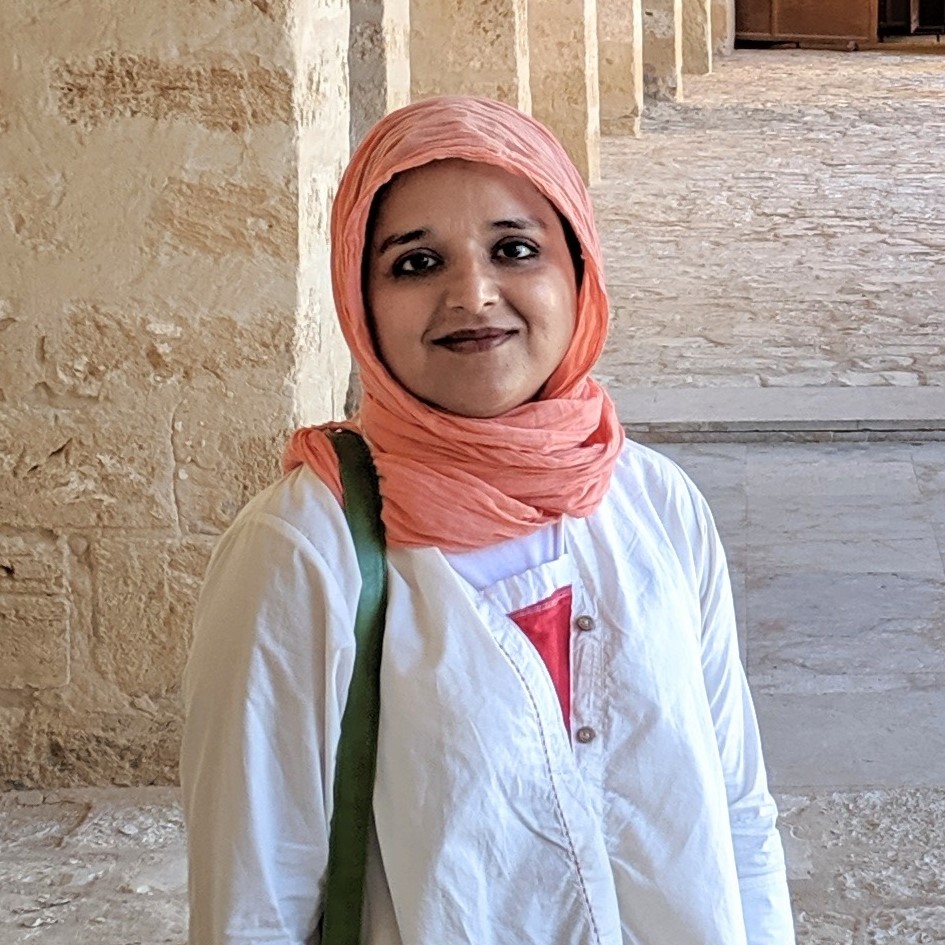
Fozia Bora (Trustee) is Professor of Islamic History in the School of Languages, Cultures and Societies at the University of Leeds. She is currently co-leading the research project ‘A Somali Village in Colonial Bradford’. Her contribution to this project includes both historical research and building a research and creative team to understand and share this critical yet understudied chapter of Bradford and Somali diaspora history in academia and in community spaces. Fozia was awarded her doctorate by the University of Oxford and joined the University of Leeds in 2012. In 2021, she received a Women of Achievement Award from the University, in recognition of her work on engaging communities outside academia with her research, and for developing innovative teaching practices that draw on global majority knowledge systems. Her book Writing History in the Medieval Islamic World: The Value of Chronicles as Archives (Bloomsbury 2019) argues for a reconsideration of history writing as archival practice in the pre-modern Islamic intellectual tradition. Fozia is Chair of the British Association for Islamic Studies. She tweets on Islamic history topics under the handle @Foziabora.

Chris Gaffney (Trustee) is Professor of Archaeological Science at the University of Bradford. He worked in commercial archaeological geophysics for two decades before coming back into academia. His interest in the Somali Village was prompted by learning about the 1904 Bradford Exhibition in its centenary year. Understanding the plan of and the story behind the Exhibition grew into a project based around undergraduate and postgraduate teaching. Much of his research links the meaning of the past in ways relevant to people interested in understanding current and future challenges. This focus on societal enrichment includes the promotion of cultural and environmental awareness. Chris was the academic recipient of the Queen’s Anniversary Prize for Higher and Further Education in 2021. Chris has wide experience of charities and the wider cultural sector. He is the Chair of the National Heritage Science Forum, the European Archaeological Council’s Remote Sensing Working Group and the Theatre in the Mill’s Advisory Board. Widening participation in education has been integral to his work, and, when seconded into the PVC Research & Innovation position at the University of Bradford, he was a member of the Yorkshire Consortium for Equity in Doctoral Education Management Board. Chris is a member of Bradford 2025 City of Culture’s Sub-Committee on Research and Evaluation. He is a reluctant social media user, @resandmag.
 Somali Village